
 206-535-2932





Musika Quick Stats
25 Years
Since We Started
41,456+
Happy Customers
10,769
Cities with Students
3,123
Teachers in Network
Lesson Special - Up to 20% OFF! Get Started Now with a Risk-Free Trial!
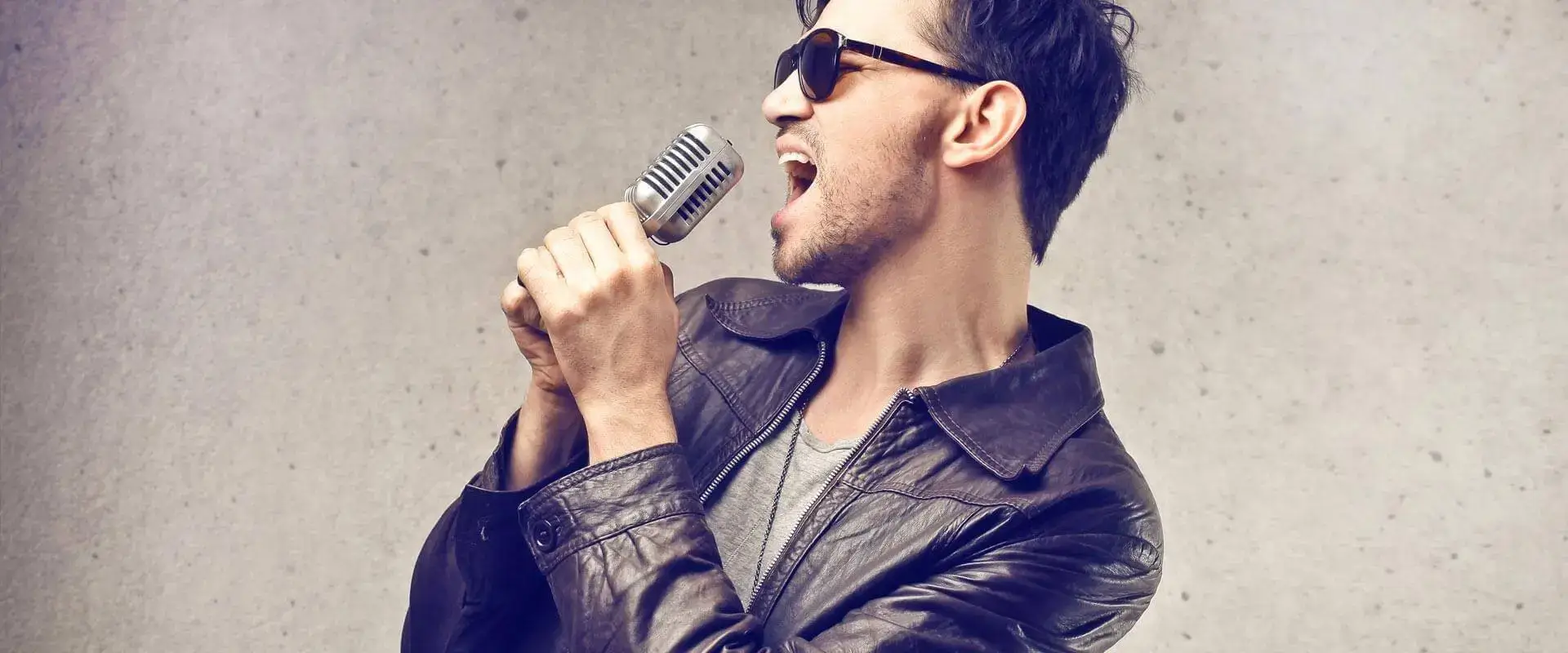
Here are just a few of the many teachers offering Voice lessons in Seattle . Whether you are looking for beginner guitar lessons for your kids, or are an adult wanting to improve your skills, the instructors in our network are ready to help you now!
Instruments: Piano Guitar Voice Drums Bass Guitar Ukulele Double Bass Keyboard Acoustic Guitar
For beginning to students I like to have them learn their notes on the bass guitar first and foremost. Once we have become familiar with the neck of the bass we introduce Hal Leonards's Bass Method Book 1. This will build our foundation for learning to read time signatures, notes in bass clef, rhythms, as well as playing complete songs. For intermediate bass students I like to gauge the level and tailor a program for that individual. Read More
Instruments: Piano Guitar Voice Trumpet Trombone Bass Guitar Ukulele Recorder Orchestral Percussion Electric Guitar Acoustic Guitar
For beginning students, I strive to teach the basics of music theory while learning the fundamentals of producing characteristic tone on their instrument. I typically start by working through the Essential Elements method book and introduce solos, ensembles, and orchestral excerps when appropriate. If the student is a part of a school or community ensemble, I work with the student on any pieces that their ensemble is preparing for performance. Read More
Instruments: Guitar Voice Drums Bass Guitar Harmonica
My teaching method is... You got to knowthe rules 1st, before you can then break the rules.This is how you develop your own unique style.And its what separates the Pro Players from the restof the pack. But even if you don't want to play professionally,maybe you just want to learn a few chords, licks,songs, for yourself, or to impress friends.That's ok too! I welcome every level and style. Read More
Instruments: Voice
Practice is essential to growth, but if a student does not enjoy their repertoire, they simply won't practice. Therefore, I work to find common ground with students when selecting songs. I will not force Classical or Jazz, but feel the technique these styles teach are invaluable. Each student will learn music fundamentals and basic reading skills. I feel knowledge of the piano is helpful for all musicians so in early lessons I will teach piano skills to aid in practice. Read More
Instruments: Piano Voice Synthesizer Music Keyboard
I began teaching piano and voice lessons in 1996 when I was a college student. I was trained to teach by the director of Studio 90 Music School in Massachusetts. I then went on to acquire my own students, and travelled around the greater Boston area teaching children and adults in their homes. I have also taught out of many local music stores. In 2009 I went back to school for Early Care and Education, which has greatly enhanced my skills and passion for teaching younger children. Read More
Instruments: Piano Guitar Voice Violin Cello Viola Trumpet Trombone Saxophone Flute Clarinet Drums Bass Guitar Harmonica Ukulele Recorder Electric Violin Fiddle Double Bass Keyboard Electric Guitar Classical Guitar Acoustic Guitar
I believe anyone has the ability to learn music. I feel it is my duty to help my students discover their own musical path. It is my passion to show you, you have the ability to overcome any obstacles you may face in music. On May 1st I graduated from Weber State University with my Bachelors in K-12 Music Education. I got the chance to be instructed by great minds like Viktor Uzur (known worldwide for the Richter/Uzur Duo) and work along side talented students like Fan Ya Lin (pianist with a professorship at Julliard). Read More
Instruments: Voice Violin
Have any of your students won awards or been selected for special honors? How have they succeeded?
To my knowledge, none of my students have performed frequently competitively.
What do you think is the hardest thing to master on your instrument?
In my opinion, pitch is the most difficult thing to master on the violin. It is something that will always be worked on, and is the most important factor in producing a beautiful sound.
Do you use specific teaching methods or books? (Ex: Alfred, Bastion, Suzuki, Hal Leonard) Why did you choose them if you did?
Essential Elements, because they really teach the basics to beginners.
What does a normal practice session look like for you?
Beginning with scales and etudes for 20 minutes, then continuing on to a designated section of a piece for the next 40 minutes.
If you have a Music Degree, what is it in (Performance, Education, Musicology, Theory, Composition, etc) and why did you choose that degree?
I do not have a Music Degree - I felt that the Liberal Studies degree gave me a great breadth and variety of knowledge while still allowing me to incorporate music into many aspects of my education.
What is your dream piece to perform and why?
My dream piece to perform is the Sibelius Violin Concerto. It is very nuanced and complex, and has the perfect balance between technical virtuosity and emotional maturity.
If you weren't a musician what do you think you'd be doing instead?
I would be pursuing a career as a Mental Health Counselor.
What is your favorite style/genre of music to play and why?
Classical, because it forms the solid technique upon which all other genres can be mastered.
If you play more than one instrument, how did you decide to start playing the second? (Or 3rd, 4th, 5th, etc)!
I am also an amateur vocalist, which I was inspired to become after listening to numerous talented and virtuosic vocalists.
Does music run in your family? Tell us a little about your musical family members.
My paternal grandmother was a pianist, my maternal great-grandfather was a fiddler, my father has experience as a vocalist, and my mother was a professional vocalist. I also have numerous cousins that are musicians in various instruments, such as voice, piano, guitar, and flute.
When did you decide to become a professional musician? Was it a gradual decision or was there a defining moment for you?
This has been a gradual decision for me. I have been performing semi-professionally since I was in high school, went down a different path towards Mental Health Counseling, and recently chose to return to pursuing music as a full-time career.
How do I know if my child is ready to start lessons?
The child expresses interest in the instrument and shows a good amount of discipline and motivation in other aspects of life.
When will I start to see results?
There will be results by the end of the third lesson.
Did you have a teacher that inspired you to go into music? How did they inspire you?
My first violin teacher greatly inspired me, on both a personal and a musical level. He was an amazing musician and was very personable with me, and I always left my lessons with him feeling inspired and excited, albeit exhausted.
What musical accomplishments are you most proud of?
I am most proud of soloing with orchestras. There is no greater feeling than standing before an orchestra and knowing they are all playing for me.
Why did you choose your primary instrument?
I chose my primary instrument because I loved the way it sounded and the way it looked when being performed on. I also had a relationship with my violin teacher prior to beginning lessons.
What advice do you have about practicing effectively?
Break the piece you are working on into smaller components and tackle one at a time, slowly, before bringing it all together.
25 Years
Since We Started
41,456+
Happy Customers
10,769
Cities with Students
3,123
Teachers in Network
Trusted as the industry leader, for over 21 years the teachers in our network have been providing Voice lessons in Seattle to students of all ages and abilities.
We'll then reach out to the teachers for you.
Schedule the risk-free trial lesson directly with the teacher.
Continue with that teacher or try someone else.