
 206-535-2932




Musika Quick Stats
25 Years
Since We Started
41,456+
Happy Customers
10,769
Cities with Students
3,123
Teachers in Network
Lesson Special - Up to 20% OFF! Get Started Now with a Risk-Free Trial!
Here are just a few of the many teachers offering Guitar lessons in Seattle . Whether you are looking for beginner guitar lessons for your kids, or are an adult wanting to improve your skills, the instructors in our network are ready to help you now!
Instruments: Piano Guitar Voice Trumpet Drums Bass Guitar Mallet Percussion Orchestral Percussion Latin Percussion
Each and every student will respond differently to instruction, and I am proud to say that I am extremely adaptable. I want to make sure that I am communicating with each individual in a way that they will understand and be successful with, because the student is the most important variable. I use a wide variety of pop culture, classical influence, and I make sure to provide my students with opportunities to challenge themselves and grow in many ways, including encouraging them to participate in live performaces, competitions, and composition. Read More
Instruments: Guitar Bass Guitar Electric Guitar Acoustic Guitar
As a teacher there's not a greater gift but to see students, specially younger students, progressing on their instruments and get better over time. To see younger students develop a passion for music is truly one of the greatest gifts you can give them. I believe the student receives the most value when their instruction is effective and rapid in helping them attain their goals. As a result, I formulate individual lesson plans tailored specifically to each student to help them reach their goals. Read More
Instruments: Piano Guitar Trumpet Trombone Bass Guitar Euphonium Tuba
My primary goal as an instructor as well as a performer is to create a life long passion for music and personal growth within each of my students, and making sure that each student enjoys and looks forward to their lessons each week is intregal to this goal. Whether an adult, child, beginner, or advanced, realizing the students motivation and personal goals for each lesson is important to tailoring lessons to each persons unique abilities and preferences. Read More
Instruments: Piano Guitar Bass Guitar Organ Synthesizer Lap Steel Guitar Ukulele Keyboard Electric Guitar Classical Guitar Acoustic Guitar
Growing up in the Los Angeles area I started playing piano at age 8, guitar at age 11 and was working professionally as a musician by age 13 in local rock and acoustic acts. As a teenager I played in local college big bands, studied classical guitar at California Institute of the Arts and was invited to study at UC Santa Barbara to develop my other musical love, composing. Throughout my young adult life I studied classical and studio guitar, piano and composition at California State University Northridge and Javanese and Balinese Gamelan music at UCLA and Cal Arts. Read More
Instruments: Piano Guitar Trumpet Drums Bass Guitar Keyboard Electric Guitar Acoustic Guitar
I've loved teaching since I first tried it in high school, when I mentored my own friends in the art of drumming. It's the perfect gig; I get to nerd out every day about the musical things that I'm passionate about with my students! Since graduating from the University of Miami with a Bachelor of Music degree in Studio Music and Jazz / Drum Set Performance, I've also kept busy performing at SXSW, Capitol Hill Block Party, Bumbershoot, Treefort, BAMF! and numerous Florida-based festivals. Read More
Instruments: Guitar
In guitar lessons with me, I generally go through a guitar book (the book varies depending on the students experience and what we decide to use) but mainly focus on what the student wants to learn. Learning the fundamentals of guitar will help the student learns what they want to learn, so that is applied to the lessons. A typical lesson with me goes as follows: Tune and warm up song (something the student is confident in). Read More
Instruments: Piano Guitar Voice Bass Guitar Electric Guitar
I work on a case-to-case basis, having in mind the student's musical preferences, guiding them through the genre they want to play (even though of course, the basic music theory knowledge is the same for all of them), there will be students that just want to learn the basics of how to play simple songs, and there will be some that want a more integral guidance of the musical discipline. Read More
Instruments: Piano Guitar Bass Guitar Ukulele Recorder Double Bass Electric Guitar Acoustic Guitar
What musical accomplishments are you most proud of?
I was honored to be selected by the American government for a Fulbright scholarship. It was shortly after the Russian/Georgian war of 2009, and they wanted me and a band to perform for the refugees of the war. It was an incredibly humbling and gratifying experience. I played all over the country, including a small music school in Gori, the home town of Joseph Stalin. The school only had power for several hours a day, the toilets didn't work, and there was no heating or air-conditioning. We played in their auditorium filled to the rafters with young people looking for an outlet. They had suffered greatly during the war and stormed the stage after the show.
Why did you choose your primary instrument?
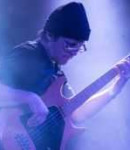
To study my primary instrument, bass, was a quick decision for me to make. My uncle (a bass player also) performed frequently with his band, and would rehearse in the basement. He was also a bit crazy since he collected over 100 guitars and basses. Each instrument was carefully cared for, and he kindly allowed me to play any that I desired play. I tried guitar, but the strings hurt my fingertips, so I tried bass. Once I picked it up, I was instantly infatuated with it. I love to support other musicians, and I love the warmth of the tone.
How do I know if my child is ready to start lessons?
If a child can walk or crawl, they are ready for music lessons. Of course, I wouldn't have them sight reading, but I would try my best to engage their faculties with rhythm, games, and good fun. Some of the most memorable moments I have had as a student (and I still am a student) are the simple games and devices teachers would use to engage me. Ms. O'Suna taught me the basis tee's and taa's of rhythm, and it has stuck in my memory since. I would always suggest that a parent be open to a student experimenting and being playful. Children are expert improvisors, and that can only be cultivated with encouragement and openness.
What advice do you have about practicing effectively?
By far, the most important thing is to be aware of what you are trying to accomplish before you sit down to practice. What are you going to work on, and how much time will you spend doing it? The most common mistake is for a student to sit down (or stand) and simply wander around on their instrument without purpose. While there is some value to focusing on the mechanical aspects of playing, such as finger exercises, noodling etc...the student should still have a precise idea of what to do, then record it in a practice log (along with all relevant information, such as tempos and keys).
What do you think is the hardest thing to master on your instrument?
By far, the most difficult thing to master on a stringed instrument are the shapes of intervals and scales. The intervals of a minor-7 chord are mapped throughout the fingerboard, but you must know where they are and be able to attach them to chord tones of another chord. To make it more difficult, your ear must also be tuned well enough to know how far the intervals are from each other, and recognize how each note in a chord related to the tonic. Playing music is hard! But, with time and diligent practice, you can overcome the difficulties.
When will I start to see results?
You will see results only if you are willing and motivated to study. I will do everything in my power to help you, but I can't practice for you. Ideally, with what we work on, combined with your own pursuits (such as starting a band), you will see results within a year; but that is only with serious study. I understand that we all want to get good quickly, but there are no shortcuts. The study of any craft is a lifetime of progress. Try not to think in months or years, but in decades. Any artistic pursuit will take a lifetime to master.
Did you have a teacher that inspired you to go into music? How did they inspire you?
Yes. I have had many great, and some not-so-great teachers in music. One of the most inspiring for me was Mr. Dragoo, my fifth grade music teacher. He was a local phenom who could play two violins at once. I wasn't aware (my mother told me many years later) that Mr. Dragoo had stopped by my house when I was away and pleaded with her to support my desire to play. He asked that I not be told of his visit until I was out of school. After I moved away from home, my mother casually mentioned his visit to me. It helped me through some tougher times playing music.
25 Years
Since We Started
41,456+
Happy Customers
10,769
Cities with Students
3,123
Teachers in Network
Trusted as the industry leader, for over 21 years the teachers in our network have been providing Guitar lessons in Seattle to students of all ages and abilities.
We'll then reach out to the teachers for you.
Schedule the risk-free trial lesson directly with the teacher.
Continue with that teacher or try someone else.