714-582-3981





Musika Quick Stats
25 Years
Since We Started
41,456+
Happy Customers
10,769
Cities with Students
3,123
Teachers in Network
Lesson Special - Up to 20% OFF! Get Started Now with a Risk-Free Trial!
Here are just a few of the many teachers offering Piano lessons in Fullerton . Whether you are looking for beginner guitar lessons for your kids, or are an adult wanting to improve your skills, the instructors in our network are ready to help you now!
Instruments: Piano Clarinet
For children who are just starting, I use Bastien Piano Basics Primer Level-Level 2. From here, students graduate to selections primarily from Bach, Chopin and Beethoven. For adults I use Alfred's beginner adult course. I also supplement these books with several books that I have in my personal library, such as Keith's Snell's Essential Piano Repertoire. For scales I use Keith Snell's series and for technique I use Schaum's Fingerpower series. Read More
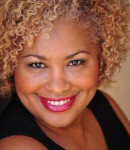
Instruments: Piano Voice
With her amazing success, Orgena has enjoyed sharing her knowledge with others and has been teaching voice, life, career and financial coaching successfully since 1993. Finding their voice, her students have gone on live full lives and start fabulous new businesses and careers, land leading roles, tour the world, sing on American Idol and The Voice, win competitions, host their own TV shows and even being recognized by Oprah to appear in O magazine Read More
Instruments: Piano Saxophone Flute Clarinet Recorder Piccolo Music
I began teaching in high school, working with middle school students, and continued throughout my academic journey. I've taught Flute, Piano, Clarinet, and Saxophone in school bands, music stores, private studios, and my own home. With over 15 years of full-time teaching experience, Im passionate about inspiring students of all ages and helping them build confidence, creativity, and a lifelong love of music. I believe in meeting each student where they are and creating a joyful, supportive learning environment that encourages exploration and growth. Read More
Instruments: Piano Violin Viola Saxophone Flute Clarinet Oboe English Horn Acoustic Guitar
Hello future Musika students! My name is Breana and I'm a multi-instrumentalist, improviser, teacher, and board-certified Music Therapist based in Los Angeles. I have a passion for exploring diverse music idioms, close collaboration with composers and other musicians, and the music of J.S. Bach. As a performer I've made appearances with wild Up, Jacaranda Music, Wordless Music Orchestra, Kaleidoscope Chamber Orchestra, The Echo Society (in collaboration with Grammy-winning composer Jeremy Zuckerman), the American Youth Symphony, and the Debut Orchestra. Read More
Instruments: Piano Saxophone Flute Clarinet
I like my students to bring a small notebook, so that they may write their homework down, and any practice assignments. I expect my students to keep a practice log of how much time they practice per week, in between lessons. I always insist that setting goals and expectations for them, is very important, as well as keeping track of whether they themselves are staying on task. I try and incorporate different ways of practicing or playing music, so that even practicing turns into being fun and exciting and doesn't feel like a chore. Read More
Instruments: Piano Violin Cello Viola Trumpet Trombone Saxophone Flute Clarinet French Horn Piccolo Oboe
I started teaching violin about 15 years ago. A few years later I started teaching viola and cello. When I got to CSULB I started learning all the band instruments. I did some coaching for several years at middle schools and high schools. After that I bought a lot a wind instruments and started to teach wind instruments privately. Playing and teaching each instrument is like entering a different world. Each instrument is special in its own way. Read More
Instruments: Piano Trumpet Trombone Bass Guitar Synthesizer Euphonium French Horn Tuba Music
Of course, everything depends on what you, the student, want to learn! For younger students that are just starting, I've found the Accent on Achievement books to be very helpful in developing the basics of playing. From there, Classically-focused players would learn solo repertoire, Jazz-focused players would learn standards and improvisation, and all the other genres would begin to narrow down their appropriate fields. Adults are certainly welcome as well and I'd love to help them learn whatever they are interested in. Read More
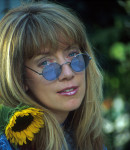
Instruments: Piano Guitar Voice Bass Guitar Banjo Electric Guitar Acoustic Guitar
Does music run in your family? Tell us a little about your musical family members.
My mother is very musical. She sang in church choirs, plays piano and guitar.
When did you decide to become a professional musician? Was it a gradual decision or was there a defining moment for you?
Every time I tried to move away from music, it came back and grabbed me. I got my Master's in Education from HArvard University and was set to interview to work on Children's Television Workshop in Boston, Mass But I went back to Scotladn, started busking inthe streets of Edinburgh adn fell in with a proudcer who ended up recording my songs and getting me a publishing deal in London.
If you play more than one instrument, how did you decide to start playing the second? (Or 3rd, 4th, 5th, etc)!
I started by playing the piano, then grabbed my mother's guitar and stared playing that. Later, I gravitated toward bass, banjo, autoharp,dulcimer, ukelele, melodica. I do play some violin too. As I am a producer, and have a Pro tools and Logic studio, I find it helpful to play as many instruments as I can.
What is your favorite style/genre of music to play and why?
I love the electric guitar. i love playing blues riffs. I love grunge music (my generation, I guess) and I love jazz.
But I also love Celtic music, American Folk music and I like to play in different tunings on the guitar.
If you weren't a musician what do you think you'd be doing instead?
I am also a writer and an English teacher.
If you have a Music Degree, what is it in (Performance, Education, Musicology, Theory, Composition, etc) and why did you choose that degree?
B.A in Music, English and Theater.
I wrote scores for theater when in college.
What is your dream piece to perform and why?
I like to take one songwriter/band and learn as much as I can from him/her/them. recently, I have been learning as much as I can about The Beatles. Studying each song is a huge education
What does a normal practice session look like for you?
We go something like this:
1. 10-15 minutes warm up: scales, drills, chords. Change tempos.
2. The rest of the session is on repertoire: we have a number of songs we want to learn. And so we work the song. I teach from the original recordings. we adapt as we go, but we really study the original work and learn as much from it as we can.
Do you use specific teaching methods or books? (Ex: Alfred, Bastion, Suzuki, Hal Leonard) Why did you choose them if you did?
When I teach piano, I use Hanon. These are the best finger exercises ever created. As to guitars, bass, string things, I use my own method. My book has not been published but one ofthese days it will be!
Have any of your students won awards or been selected for special honors? How have they succeeded?
Two of my students have ended up with record deals. I provided a safe space for them to work on their crafts and record, I did not judge. I simply recorded them very well, and inspired a lot of confidence.
What do you think is the hardest thing to master on your instrument?
The hardest thing is to stick with it. Patience. Also focus. This is why an sintructor can be so helpful. It takes a while to build confidence and to get a sense of what you want to do with your instrument. You need support and structure.
What musical accomplishments are you most proud of?
I was awarded BEST NEWCOMER in the UK and got to represent my country in Japan at a World Music Festival. The award was given to me by Sir Goerge MArtin, and I will never forget that moment, though I regret I was so young I tried to hug Sir Martin! And that was not appropriate!
Why did you choose your primary instrument?
I really didn't. The guitar chose me. I had to write songs. I started writing when I was six, on the piano. The instruments were there, adn I felt the need. They drew me to them.
Did you have a teacher that inspired you to go into music? How did they inspire you?
The answer to this is that my teachers were so awful I was determined to go into music to be better than they were to me.
One viola teacher made me, for a month, stand and hold my viola. I didn't even play. And then he criticised the way I held the instrument.
When will I start to see results?
The result you want to see is a need the child will feel to play the instrument! To express. To release energy.
What advice do you have about practicing effectively?
Build in foundation work. Practice scales, chords, and work with a metronome.
Do the stuff that isn't fun first. But get it done. And do it often.
Know theory. Learn how to read, if notation, tablature, chord charts. Anything that works.
How do I know if my child is ready to start lessons?
You will easily know if your child starts playing an instrument on his or her own. Do not push or force music on a kid.
25 Years
Since We Started
41,456+
Happy Customers
10,769
Cities with Students
3,123
Teachers in Network
Trusted as the industry leader, for over 21 years the teachers in our network have been providing Piano lessons in Fullerton to students of all ages and abilities.
We'll then reach out to the teachers for you.
Schedule the risk-free trial lesson directly with the teacher.
Continue with that teacher or try someone else.