
 301-859-4887





Musika Quick Stats
25 Years
Since We Started
41,456+
Happy Customers
10,769
Cities with Students
3,123
Teachers in Network
Lesson Special - Up to 20% OFF! Get Started Now with a Risk-Free Trial!
Here are just a few of the many teachers offering Piano lessons in Gaithersburg . Whether you are looking for beginner guitar lessons for your kids, or are an adult wanting to improve your skills, the instructors in our network are ready to help you now!
Instruments: Piano Cello Drums Conga Latin Percussion Djembe
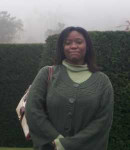
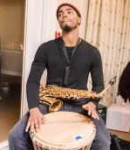
I'm a performer and educator motivated most by the flash of joy I see in students' faces when they first grasp a new musical concept. With a global perspective on music cultivated by my background performing Brazilian music and American Jazz since childhood, and further bolstered by a B.A. in Anthropology: Ethnomusicology from Ithaca College, I have been a full time touring musician for the last 10 years. In addition to mainstage festival appearances all over the country, I have been lucky enough to teach clinics and master classes in percussion at top conservatories and universities such as Oberlin College & Georgetown University, as well as workshops in high schools, middle schools, & elementary schools all over the US. Read More
Instruments: Piano Saxophone Flute Clarinet
I have been a private instructor for over fifteen years and have brought my students much success in their musical endeavors. I have performed in solo recitals, competitions, chamber ensembles, bands, and orchestras in Florida, Georgia, Missouri, Ohio, and West Virginia. I am also is the recipient of various music scholarships and the winner of several different clarinet competitions. Additionally, my students have received superior ratings at local and state Solo & Ensembles, selected as All-State band members, received top chair placements, and much more! Read More
Instruments: Piano
It's most rewarding when my student's display those "ah ha!" moments during lessons. It shows me that they not only understand the material, but that they care about what it is they are learning by striving to improve. I also believe it's important for them to feel that what they are participating in is a worthwhile activity that is not only fun but rewarding to explore. Also making sure they recognize the importance of practice by pointing out how their improvements are the result of their hard work. Read More
Instruments: Piano Saxophone Djembe
I will also use many Jazz and Latin Standards to apply the theoretical patterns learned. Artist included will be Charlie Parker, John Coltrane, Pat Methany, Miles Davis, Thelonious Monk, and Sonny Rollins. I also communicate with my students as well to see specifically what they would like to learn/understand more of. Also, for my piano students we will be use the "Hanon Complete" book to work on speed and strength. Read More
Instruments: Piano Voice
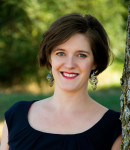
I can teach mostly all level voices, male and female. I was teaching children age from 8-14 at Municipal Higher Education Establishment of Choreographic Arts and also give private vocal lessons to students from age 25-68. I love working with beginners because they are open for new experience and ready to receive information. Especially I love working with children, whose desire to learn something new is helping them to move forward very fast. Read More
Instruments: Piano
I start all of my beginning students in John Thompson Book One as it provides a great base to build on. After that lessons become very personalized to the student's learning styles as well as their individual goals. Adult beginners I supplement with Faber. I aim to get all of my students playing "real" music very quickly without sacrificing solid technique and fundamentals. I tend to spend half of a lesson on drills and half working on songs. Read More
Instruments: Piano Voice
Nothing is more rewarding than seeing one of my students develop a passion for music! Therefore, it's important that each student progresses at his or her own pace. I encourage this by setting realistic goals for my students at each lesson. Acknowledging accomplishments helps fuel a students desire to progress, and makes students eager to learn more. By trying to find out what inspires the student, I can successfully tailor my instruction to their wants and needs. Read More
Instruments: Piano Voice
Why did you choose your primary instrument?
I started on piano and only moved to voice when I was in high school. I love both of them, but I love most the voice because if its ability to communicate using words.
Have any of your students won awards or been selected for special honors? How have they succeeded?
Several of my past students have won state and regional awards in Oklahoma, Georgia, and Texoma National Association of Teachers of Singing competitions. Other students have won national opera and art song awards and are now singing professionally. I am equally as proud of my students who have graduated with music education degrees and who are now teaching in TX, OK, and GA.
Did you have a teacher that inspired you to go into music? How did they inspire you?
My mom was the person who first started teaching me piano and gave me my initial love of music and singing. I then joined choir in high school, where my choir teacher eventually persuaded me to take voice lessons! Both my mom and my choir teacher inspired me because they saw my potential even when I sang out of tune and didn’t work hard. They inspired me to do better and to go out on a limb and try. And I found that I loved it when I got there.
When will I start to see results?
The voice is comprised of many muscles, and like all the other muscles of the human body, it takes time for the vocal muscles to grow and strengthen. Patience is key! However, it is possible to often see almost immediate results from better breathing, focused practice, and figuring out how to relax and release the voice to be free and resonant like it should be.
How do I know if my child is ready to start lessons?
Anyone can learn to sing. My kids started matching pitch and singing along to songs when they were a very young age! However, for the youngest students, lessons are obviously going to be shorter than with my adult students, who can easily concentrate for an hour of hard work.
What advice do you have about practicing effectively?
Effective practice is one of THE best ways you’re going to improve. I practice more effectively when I have goals, both long-term and short-term. An example from my own experience is how I recently learned a song. I had the long-term goal of learning it, polishing it, and performing it in a public setting. I broke that into achievable short-term goals for each day. These short-term goals helped me reach my long-term goals in time to give an excellent and effective performance.
Effective practice also means you practice smart. No one would go to the gym one time a month but spend ten hours there! The same is also true for singing. Even ten-fifteen minutes daily is going to be more helpful than eight hours cramming the day before your next lesson.
25 Years
Since We Started
41,456+
Happy Customers
10,769
Cities with Students
3,123
Teachers in Network
Trusted as the industry leader, for over 21 years the teachers in our network have been providing Piano lessons in Gaithersburg to students of all ages and abilities.
We'll then reach out to the teachers for you.
Schedule the risk-free trial lesson directly with the teacher.
Continue with that teacher or try someone else.