
 510-240-5040




Musika Quick Stats
25 Years
Since We Started
41,456+
Happy Customers
10,769
Cities with Students
3,123
Teachers in Network
Lesson Special - Up to 20% OFF! Get Started Now with a Risk-Free Trial!
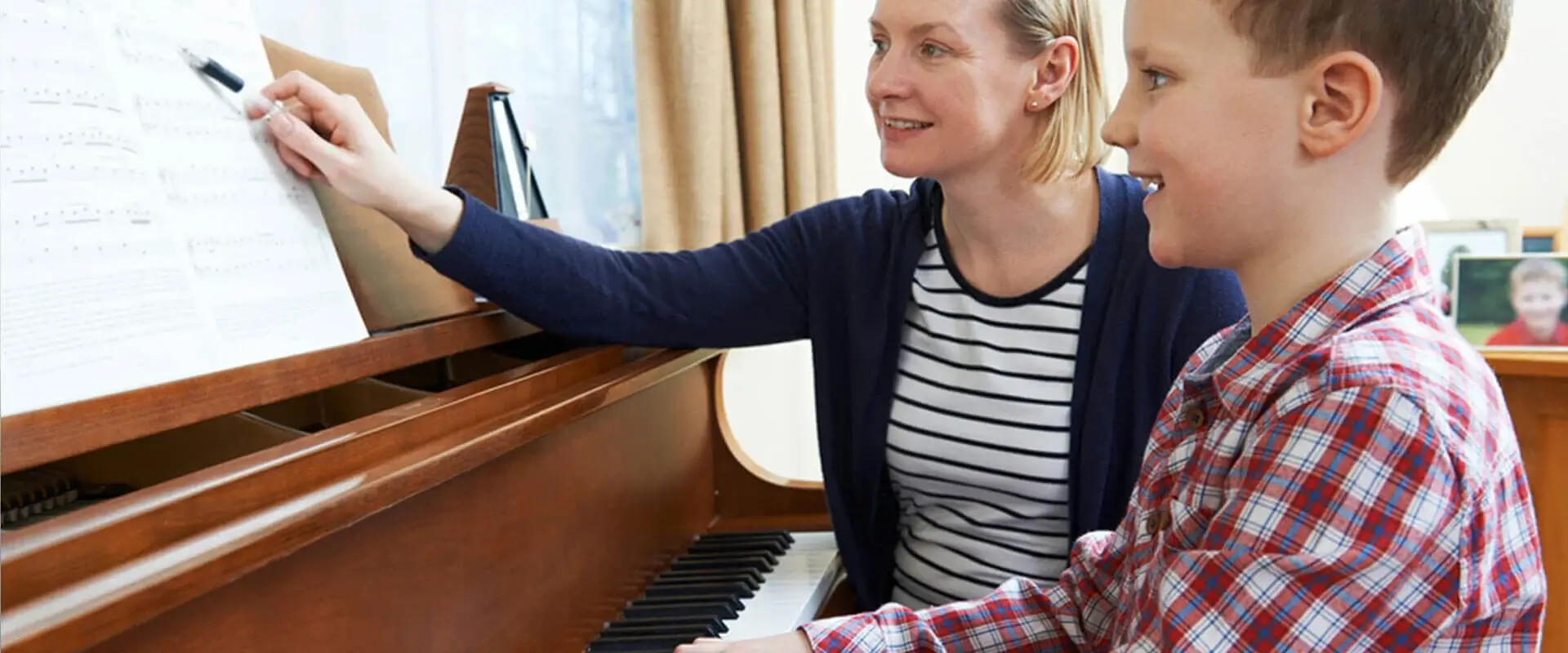
Here are just a few of the many teachers offering Piano lessons in Dublin . Whether you are looking for beginner guitar lessons for your kids, or are an adult wanting to improve your skills, the instructors in our network are ready to help you now!
Instruments: Piano Trumpet
I haven't been teaching for a long time, but my love and passion for the trumpet and music in general gives me some if the tools needed to encourage students to do their best. I try to figure out the most effective way a student learns first because all people have different ways of learning, whether it be by sight or by ear. I mainly play classical music, but play popular music as well to change things up. Read More
Instruments: Piano Guitar Voice Synthesizer Keyboard Acoustic Guitar
I'm a compassionate and enthusiastic instructor who has a love for creating listening to a diverse collection of music and passing this love of music onto my students. Since 2002, I've taken piano, vocal, songwriting music theory lessons at Twin Town Guitars and in my youth performed in youth music camps, jazz bands at St. Louis Park Senior High and various piano recitals. In 2018, I graduated from University of California, Santa Cruz with a Bachelor of Arts in Psychology and a minor in Electronic Music. Read More
Instruments: Piano Cello Keyboard
I try to balance the needs of my students and work to strengthen their musical weaknesses for example working on Vibrato or bow distribution. Usually, I like to spend 10 minutes warming up both hands with long tones, scales, arpeggios, and other fun exercises. During the next 30 minutes, we tend to focus on fixing issues relating to the music such as rhythms or intonation issues. In the last 20 minutes of the lesson I tend to focus on musicality and finding inspiration to give to my students so they can exploit their potential. Read More
Instruments: Piano Ukulele Keyboard Acoustic Guitar
I'd say my teaching style is first tailored to each individual student- their learning style, their genre interest, and their goals. Some student respond to more traditional classical structure, and some respond to improvisation as a way of learning musical concepts. What's exciting is finding out which style each student has, and always come back to the joy keeps them motivated. While I am flexible in this regard, I do have specific practice assignments and repetition exercises that are the work of learning an instrument. Read More
Instruments: Piano Voice Violin Cello Viola Mandolin Recorder Orchestral Percussion Music
I have been teaching music in school and giving private music lessons for voice, piano, violin, piano, cello, and viola since 2003. Aside from giving private music lessons, I also conduct and organize chamber ensembles, choir, orchestra, hand bell choir, musicals, recitals, and other public performances. I have been passionate guiding students across various musical genres, including classical and contemporary, and languages such as English, German, Italian, French, and more. Each lesson is a unique journey where we explore the art of voice, discovering the beauty in every note and phrase. Read More
Instruments: Piano Guitar Voice Keyboard Acoustic Guitar
I am an Artist who loves to see his students succeed. I have a strong passion for music, and utilize that passion and the skills I've developed throughout my career to cultivate students into fellow Artists. My primary goal as a teacher is to tap into the potential artistry of the students. For that reason, I am not as focused on the technical skills, as I am about spotlighting the inspiration that will facilitate the student to embody the Artist with original expression and purpose in their art form. Read More
Instruments: Piano Voice
I had my first paying gig at 7 years old and have never looked back! Always striving to keep my repertoire relevant, I developed a great ear that allows me to learn many songs quickly. I always emphasize that in my teaching so that a student is not only playing, but actively listening too. My teaching method is very open and is tailored for each individual student. With some I do any combination of technique, theory, composition, and improvisation. Read More
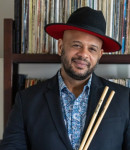
Instruments: Drums
When did you decide to become a professional musician? Was it a gradual decision or was there a defining moment for you?
The decission to be a professional musician came very gradually to me. I was always told to have a back up plan and that there is no money to be made as a musician, so I went the typical route of getting a "real job". However, It's important to me that I be passionate about my work, and there is nothing that I am more passionate about than being involved in music. So, I made the decission to be a full time professional , and I have never been happier!
Does music run in your family? Tell us a little about your musical family members.
All of my uncles can either sing and/or play guitar. They were the first to teach me about music and what the drummer's role in a band is. Family gatherings were always a lot of fun when I was growing up. They would often turn in to jam sessions and sing alongs!
If you play more than one instrument, how did you decide to start playing the second? (Or 3rd, 4th, 5th, etc)!
I play guitar too. It was actually the first instrument I ever tried to play, but it didn't quite come as naturally to me as the drums. Eventually, in my teenager years I picked the guitar up again as I wanted to start writing songs. I also enjoy singing. I think being a singer and a guitarists helps me be a better drummer because I can uunderstand the members of my band better.
If you weren't a musician what do you think you'd be doing instead?
I worked in the the tech industry for a very long time. I was relatively successful, and made decent money. So, I could do that. I probably would be doing that if I wasn't a musican, but I'd much rather be making music any day!
What is your favorite style/genre of music to play and why?
I enjoy all styles of music. I think I'm probably best at pop and rock music. One of my bands performs a tribute to The Beatles which is a lot of fun! The songs are classic and the drum parts are some of the best ever imagined.
What is your dream piece to perform and why?
Probably "Aja" by Steely Dan. It combines everything that I enjoy about music: tension, polyrhythms and simply a great melody and memorable lyrics. The drums were originally performed by Steve Gadd, who is a master at using technique and still allowing music to "feel good".
What does a normal practice session look like for you?
I always start with a warm up on a practice pad. This is a good way to warm up and to "check in" with your body. From there I like to review techniques, exercies or music that has been worked on previously and take inventory on progress that has been made and what needs to be worked on. I end every practice session (And lesson) with a few minutes of creativity. Simpoly play whatever is on your mind and in your heart!
25 Years
Since We Started
41,456+
Happy Customers
10,769
Cities with Students
3,123
Teachers in Network
Trusted as the industry leader, for over 21 years the teachers in our network have been providing Piano lessons in Dublin to students of all ages and abilities.
We'll then reach out to the teachers for you.
Schedule the risk-free trial lesson directly with the teacher.
Continue with that teacher or try someone else.