
 212-625-1520





Musika Quick Stats
25 Years
Since We Started
41,456+
Happy Customers
10,769
Cities with Students
3,123
Teachers in Network
Lesson Special - Up to 20% OFF! Get Started Now with a Risk-Free Trial!
Here are just a few of the many teachers offering Saxophone lessons in Manhattan . Whether you are looking for beginner guitar lessons for your kids, or are an adult wanting to improve your skills, the instructors in our network are ready to help you now!
Instruments: Piano Guitar Voice Violin Viola Saxophone Drums Bass Guitar Banjo Ukulele Mandolin Electric Violin Fiddle Music Keyboard Electric Guitar Acoustic Guitar
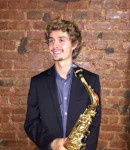
My teaching style is by assigning studies and etudes to develop fundamentals while simultaneously incorporating the learnt fundamentals into “real-time”, on the job training! I have learned all of my most valuable lessons while performing and being put on the spot; I will teach my students how to be prepared for any situation, not only in regard to music but also in relation to life, by having a calm and steady approach to the task at hand! Read More
Instruments: Saxophone Flute Clarinet Music
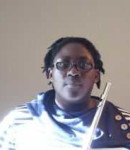
I work with students to get them to a level where they can enoy the music they like. I want my students to bring music thay want to explore and I work with them to be able to play with enthusiasm. Music is an endless science as one of my professors said "The more you learn the more you realize what you don't know". Tone and harmonics are essential for saxophone playing. Read More
Instruments: Piano Saxophone Clarinet
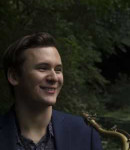
My teaching style is seasoned but spontaneous. By that I mean that at this point I have a good idea of what works and what doesn't. I have a proven repertoire of exercises and advice that have helped students and will continue to do so. But every student has a unique set of needs, so I am excited to throw away the 'play book' at the first sign that it's not working. Read More
Instruments: Piano Saxophone Flute Clarinet Piccolo
I have been regularly instructing musicians in both a 1 to 1 and group environment for at least five years. Most recently, I have had a wonderful two years teaching young talented musicians at the Royal College of Music Junior Department. I am a passionate instructor and performer who enjoys enriching other's musical lives. Whether students want to learn for recreational purposes or for professional growth, I am happy to fulfill the musical needs of my students. Read More
Instruments: Piano Trumpet Saxophone Flute Clarinet Drums
My teaching includes all aspects of music; Musical theory, sight singing, as well as Music History. My teaching style allows the child to have fun while they learn their instrument, but I emphasize a strong practice regiment. Your child will understand that while learning music and an instrument can be fun, there will be some work involved if they want to become great. I usually use either the Alfred or Rubank method books to supplement a curriculum that I tailor make for each individual student. Read More
Instruments: Piano Saxophone Flute Clarinet Piccolo
For students who are learning an instrument for band or marching band, I like to integrate their sheet music or method books into the lesson. I use method books with students who are new to their instrument. These materials are then supplemented with scales, solo repertoire, exercises, and technique work as appropriate for each student's interest and skill level. Lessons also consist of listening to previous assignments/repertoire from prior weeks and then offering feedback, answering any questions a student may have, and giving new assignments for the next lesson. Read More
Instruments: Saxophone
I began teaching about in high school about 8 years ago, and have loved watching my students surpass their goals and develop their own passion for music. For me, inspiring students to develop productive practice habits and routines is one of the most essential beginning steps, especially for younger students. My students have ranged from young first time players, to older players who are serious about getting their playing to the next level. Read More
Instruments: Piano Saxophone Music Keyboard
What is your favorite style/genre of music to play and why?
My favorite style is a combination of Hip Hop, R&B, and Jazz. I love improvising over a tight groove with impactful harmony.
If you play more than one instrument, how did you decide to start playing the second? (Or 3rd, 4th, 5th, etc)!
As a saxophonist, flute and clarinet were instruments that a lot of the music I was playing required. So, that was a part of being a professional. As a producer and composer, I wanted to be able to fully flesh out my compositions. For that reason, I worked hard on growing in my piano, guitar, and bass playing.
What advice do you have about practicing effectively?
The best thing you can do to practice effectively is make a concise plan. Before entering a practice session, decide 3 things you want to practice. For example - 1) Play the G scale 5 times without fail, 2) Work on the first 4 bars of a piece, 3) Jam along with a backing track. Then, follow those steps completely. A well planned 20 minutes can go farther than an unplanned 2 hours.
What does a normal practice session look like for you?
As a professional, my practice sessions have three elements - maintenance, growth, and work. I spend the first 10-15 minutes on fundamentals (long tones, scales, patterns) to keep my playing in shape, I spend 10-15 minutes learning something new to continually challenge myself, and I spend the rest of my time focusing on whatever music I am working on for a performance or recording.
What do you think is the hardest thing to master on your instrument?
On saxophone, tone is the most difficult thing to master because it is totally subjective and unique to each individual player.
Do you use specific teaching methods or books? (Ex: Alfred, Bastion, Suzuki, Hal Leonard) Why did you choose them if you did?
For young players, I use the Standard of Excellence series. Of the books I've tried, this series has the best visual resources. If a child needed a refresh on something we discussed in a lesson, they could easily find and understand it in these books. For more advanced players, I use the Rubank series. These books are simple and fundamental driven. Every page is an incredible opportunity to grow as a player.
Have any of your students won awards or been selected for special honors? How have they succeeded?
Yes, I have had several students receive NYSMAA scores ranging from high 90s to perfect scores. They succeeded by addressing the challenges of the pieces, creating a roadmap, and following that roadmap with persistence.
How do I know if my child is ready to start lessons?
If your child has developed basic motor skills, they are ready to start lessons. If your child is interested in music, they are more than ready to start lessons!
When will I start to see results?
As a beginner, you will notice results immediately and frequently. As a more advanced player, you will notice results less frequently, but they will be deeper and more impactful results.
25 Years
Since We Started
41,456+
Happy Customers
10,769
Cities with Students
3,123
Teachers in Network
Trusted as the industry leader, for over 21 years the teachers in our network have been providing Saxophone lessons in Manhattan to students of all ages and abilities.
We'll then reach out to the teachers for you.
Schedule the risk-free trial lesson directly with the teacher.
Continue with that teacher or try someone else.