
 714-582-3981






Musika Quick Stats
25 Years
Since We Started
41,456+
Happy Customers
10,769
Cities with Students
3,123
Teachers in Network
Lesson Special - Up to 20% OFF! Get Started Now with a Risk-Free Trial!
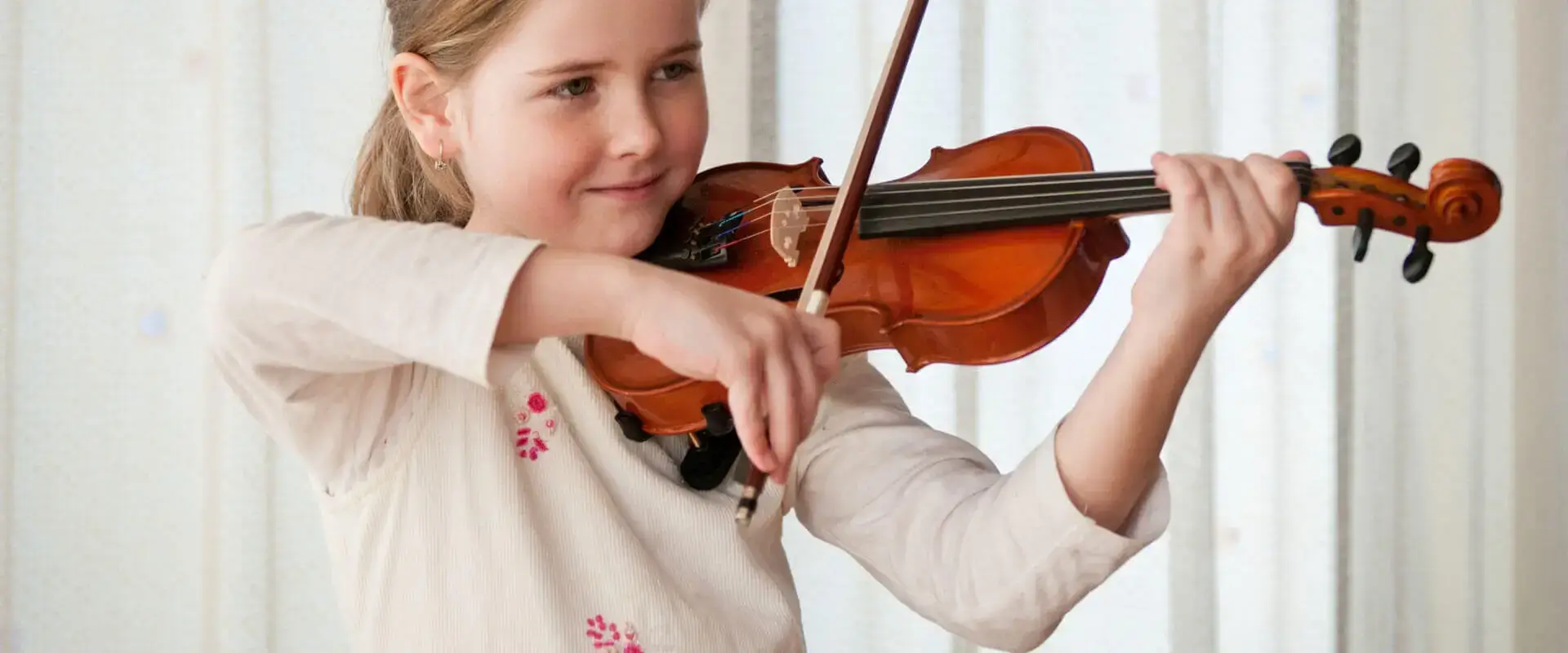
Here are just a few of the many teachers offering Violin lessons in Irvine . Whether you are looking for beginner guitar lessons for your kids, or are an adult wanting to improve your skills, the instructors in our network are ready to help you now!
Instruments: Violin
Hello! Playing violin is one of my favorite things to do, and I like to enable others to share my love of the instrument. I graduated from the University of Redlands in 2011 with a Bachelor of Arts in Music, and played in the University's orchestra and various chamber groups while studying there. I currently play in a chamber group that performs original Japanese music, and I currently teach at a non-profit music school in addition to private lessons. Read More
Instruments: Violin
I currently work as the violin instructor and coordinator for Pacific Symphony's Santa Ana Strings. have taught students from the ages of five to adults. My students hold a busy schedule with violin recitals and are also given the opportunity to participate in master classes. In addition, they are involved in their school orchestras, have toured Europe, been members of OCYSO, and my former student now teaches along side with me at Pacific Symphony's Santa Ana Strings. Read More
Instruments: Piano Guitar Violin Viola Bass Guitar Ukulele Mandolin Keyboard Electric Guitar Classical Guitar Acoustic Guitar
I have taught quite literally all ages. 5-75. Styles and lesson books used varied depending upon student and school. I usually taught Suzuki for violin, viola and classical guitar (tend to prefer Scott Tennant Pumping Nylon book for classical guitar though). And usually Faber Piano Adventures for young piano students. Eventually going to Clementi Sonatinas and Chopin Preludes. Also Mel Bay Modern Guitar for beginning rock/jazz guitarists. Then eventually going to Mickey Bakers Jazz Guitar books. Read More
Instruments: Piano Violin Cello Viola Trumpet Trombone Saxophone Flute Clarinet French Horn Piccolo Oboe
I started teaching violin about 15 years ago. A few years later I started teaching viola and cello. When I got to CSULB I started learning all the band instruments. I did some coaching for several years at middle schools and high schools. After that I bought a lot a wind instruments and started to teach wind instruments privately. Playing and teaching each instrument is like entering a different world. Each instrument is special in its own way. Read More
Instruments: Piano Guitar Voice Violin Cello Viola Trumpet Trombone Saxophone Flute Clarinet Drums Bass Guitar Organ Synthesizer Harp Accordion Harmonica Lap Steel Guitar Banjo Ukulele Mandolin Recorder Lute Electric Violin Fiddle Double Bass Euphonium French Horn Tuba Piccolo Mallet Percussion Orchestral Percussion Shakuhachi Oboe Bassoon English Horn Conga Latin Percussion Keyboard Electric Guitar Djembe Classical Guitar Acoustic Guitar
Derek is most known for his association with the John Daversa Big Band. Derek has had the pleasure of meeting and performing with many of his musical heroes. He has recorded live and studio albums with Arturo Sandoval, Jon Faddis, John Fedchock, James Morrison, Greg Gisbert, Roger Ingram, Paul Stephens, Scott Englebright, Donny Dyess, the Tastee Bros, Bernard Wright, Gene Coye, Steve Reid, Kate Reid, Melvin Butler, Ed Calle, Richard Todd, Mike Brignola, Alex Norris, Dante Luciani, John Hart, Martin Bejerano, Chuck Bergeron, Rick Margitza, and appears on the Gary Lindsay album "Are We Still Dreaming" with the South Florida Jazz Orchestra. Read More
Instruments: Piano Violin Cello Viola
For beginning string student's, I use Essential Elements for Strings and Schroeder method books. Once the student has grasped the basic fundamentals and note reading, I begin to introduce solo repertoire from the Suzuki String method. Along with technical studies and solo repertoire, the student will learn scales ranging from one to four octaves. For beginning piano student's, I use the Bastein Piano series. This method is complete with a method book, solo repertoire, theory studies and scales. Read More
Instruments: Violin Viola
I would like to inform little of music theory as needed for better understanding of music. Mainly I would focus on letting students make their goal and achieve it. The way I teach students is starting with setting a goal for each lesson time. After setting a goal, I will organize time to spend to go through anything we need to work on together. I will assign my student to read next part until we meet next lesson. Read More
Instruments: Violin
If you play more than one instrument, how did you decide to start playing the second? (Or 3rd, 4th, 5th, etc)!
I started on the piano. I am happy I did because it taught me the very basics of music which helped me transfer that to violin very easily. I still play piano and teach piano as well.
Does music run in your family? Tell us a little about your musical family members.
I am one of 14 children (yes, you read right!). All of my siblings have some musicality in them - some more than others. I am the only professional musician in the family however.
When did you decide to become a professional musician? Was it a gradual decision or was there a defining moment for you?
I knew from the moment I picked up the violin. I can't explain it except that something in my body and mind knew this is what I'm going to do for the rest of my life.
What is your favorite style/genre of music to play and why?
Classical - I enjoy how all of these moving parts work together in a piece by Beethoven or Brahms. I have played many other genres and enjoy all of them from fiddle to movie music, rock to modern.
If you weren't a musician what do you think you'd be doing instead?
I enjoy hiking and coffee, as well as talking about pretty much anything with just about everybody. I believe I would be involved in television either as an actor or as a talk show host.
If you have a Music Degree, what is it in (Performance, Education, Musicology, Theory, Composition, etc) and why did you choose that degree?
I have three Music Performance degrees from three different schools. I love performing and want to be the very best that I can be on my instrument.
What does a normal practice session look like for you?
A normal practice session looks different depending on what I have coming up on a concert schedule. In addition to scales, I usually practice a movement of a Bach sonata or partita because Bach's music demands purity of tone and rhythm. I will move on to a concerto that I am working on and then I will follow that up with chamber work such as a trio or duo that I will perform later that week/month.
What is your dream piece to perform and why?
I would love to perform all six sonatas and partitas by Bach in one recital. These works are staples of the repertoire and of the Western Music canon. It would be a dream come true to do this.
Do you use specific teaching methods or books? (Ex: Alfred, Bastion, Suzuki, Hal Leonard) Why did you choose them if you did?
I use Suzuki method. They are simply the best method to use in my opinion. The repertoire is fantastic and the way that the method focuses on mastery of tone at such a young age is paramount.
What do you think is the hardest thing to master on your instrument?
I believe that consistency is the hardest thing to achieve on one's instrument. Consistency of tone and pitch is the ultimate in any musician's journey. It is always something that has to be kept in check and to continue to strive for.
What musical accomplishments are you most proud of?
One of the things I'm most proud of is being a part of the Aspen Music Festival's Orchestral Leadership Fellowship Program. I have been chosen as one of nine mentors to take care of and mentor an orchestra at the esteemed festival. My first year as part of the fellowship, I was partnered with one of my closest friends and we were able to mentor young people on how best to play together. Truly a life changing thing it is to help create excitement in a lasting way in people's lives.
Why did you choose your primary instrument?
I had a friend that I didn't really like that played the violin and I thought to myself, "Hey, I can do that better than him!" That's how I started. Don't worry, he's one of my closest friends to this day.
Did you have a teacher that inspired you to go into music? How did they inspire you?
Yes I did. My first Suzuki teacher was phenomenal. She was caring and gentle whilst being disciplined and motivating. Those things are often hard to achieve together, yet she did it all with grace and inspired me to be the very best I could. Without her, I would not be playing today.
How do I know if my child is ready to start lessons?
Generally I start teaching at age 5. Each child is different, but if they love music and are big enough to hold things without dropping them, then they are set. That age varies and depends completely on what the parent feels is best.
When will I start to see results?
Over time - Each day is a journey and just like in all good things, it takes time but it happens. Even to this day, after year and years of practice, I will feel like I'm not advancing and then one day I'll go back and listen to a recording I did a bit ago and see the progress. It's hard to see the forest through the trees but it's great to step back and get a big picture view often.
What advice do you have about practicing effectively?
Always have a plan and stick to it. A little progress each day is better than one big chunk on one day of the week. A great piece of advice is to anly practice on the days you eat!
25 Years
Since We Started
41,456+
Happy Customers
10,769
Cities with Students
3,123
Teachers in Network
Trusted as the industry leader, for over 21 years the teachers in our network have been providing Violin lessons in Irvine to students of all ages and abilities.
We'll then reach out to the teachers for you.
Schedule the risk-free trial lesson directly with the teacher.
Continue with that teacher or try someone else.