
 909-284-9650






Musika Quick Stats
25 Years
Since We Started
41,456+
Happy Customers
10,769
Cities with Students
3,123
Teachers in Network
Lesson Special - Up to 20% OFF! Get Started Now with a Risk-Free Trial!
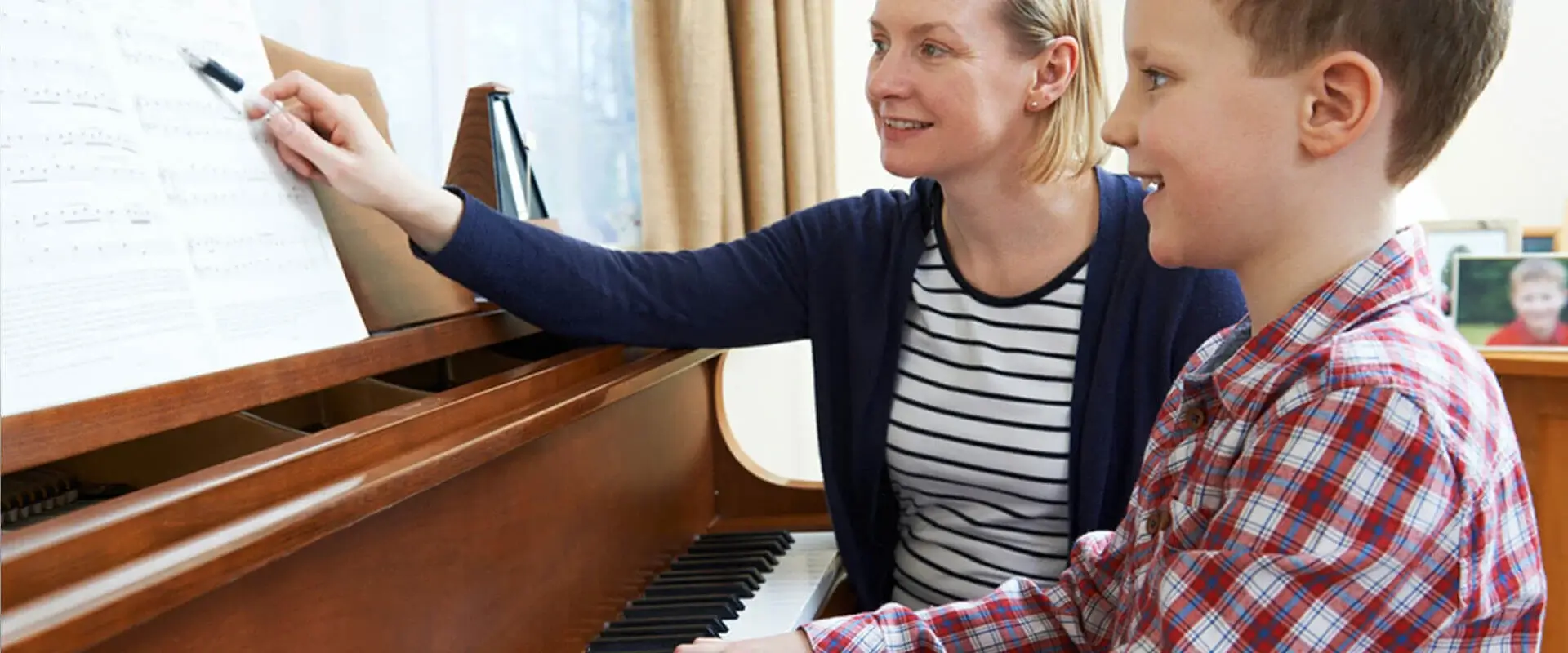
Here are just a few of the many teachers offering Piano lessons in Upland . Whether you are looking for beginner guitar lessons for your kids, or are an adult wanting to improve your skills, the instructors in our network are ready to help you now!
Instruments: Piano Voice Trumpet Euphonium
I have been teaching for the past 10 years and have always been passionate and dedicated to improving a students ability and maximising their potential whether it be for fun or for a specific achievement. I was head of music at two international schools in Stockholm, I taught in 5 different schools in Sydney and I built up my own music business of over 25 students in Stockholm teaching trumpet, piano and voice. Read More
Instruments: Piano Drums
My teaching style is very Freddie Gruber, if you don't know who that is I recommend you look him up on youtube! I believe in motion. In understanding the motions your body has to make and repeating them like an athlete to get the same sound on the drum every time you hit a drum. In sitting down to play and not be nervous you will mess up, but love the fact that you will mess up and it's okay and part of this process. Read More
Instruments: Piano Voice Acoustic Guitar
Of course, acknowledging accomplishments helps students feel they're progressing, but finding what truly inspires them will help them want to practice and get better. For me, I found scales and theory boring as a kid, so I wished my teachers would teach me how to play my favorite songs and write my own with a little theory mixed in instead of only learning the theory and scales. I aim to encourage my students to want to be the best they can be and to help them feel accomplished by following their dreams and inspirations. Read More
Instruments: Piano Guitar Voice Saxophone Clarinet Drums Bass Guitar Synthesizer Music Keyboard Electric Guitar Classical Guitar Acoustic Guitar
I have taught for over twenty years to all ages and levels. I teach the fun way by teaching the student what they would like to know by tailoring each lesson to fit there personal goals, needs and questions. I've studied at Lamont School Of Music, music composition; classical and commercial. I've also been doing Music Production for twenty years as well. I've performed in various parts of the world, and even had the opportunity to perform on Duke Ellington's birthday in NYC Thank you for reading and look forward to teaching you soon. Read More
Instruments: Piano Guitar Bass Guitar Electric Guitar
I've been teaching guitar for the past 4 years now, and I like to focus on a fun way of learning I achieve that by starting to learn songs right away no matter what level you have on guitar, we explore your favorites artists and I plan my class around that, teaching you chords progressions, scales, improvisation, how to read music, how to read tablatures, finger independence all of this keeps the class fun while learning all the information needed to be proficient with the instrument, we can go from a basic understanding of the guitar to a professional level. Read More
Instruments: Piano Flute Music Keyboard
Lydia Oshavkova /Bulgaria/, Prof. Thomas Jensen /Denmark/, Prof. Toke Christiansen /Denmark/, Lena Kildahl /Denmark/ and others. She is a prize-winner in many Bulgarian and international competitions. Amongst them is The International Summer Academy Prag-Wien-Budapest /Vienna/; First Special Award for performing French Music from the International Competition for Instrumentalists and Composers Earth and People; Second Award from the International Competition Earth and People; Best Performing Award for German Music from the International Competition for German and Austrian Music M.A.G.I.C.; Read More
Instruments: Piano Voice Synthesizer Keyboard
How do I know if my child is ready to start lessons?
Typically, when a child is ready, they will let you know. In as many ways as they can think of. And sometimes as loudly as possible... That being said, there are occasionally those talented students that are hidden beneath a shy and mild-mannered exterior that may not exude the zeal of others. In these cases, parents should look for three key factors: 1. Physical size/development of the child: I have struggled watching too many children become frustrated with music too early because their hands are too small to reach a note, or they cannot see the music from their bench, or their mouthpiece should be called a face piece. Kids grow fast their first 10 years, so even holding off a few months for a growth spurt can make the difference between frustration and tears and a lifelong love of music. 2. Genuine, unprompted interest: if you often find your child seated at the piano staring into its guts trying to figure out how it all works, or singing from morning to night, or tapping rhythmically, even if it’s on the back of your seat in the car and potentially less than relaxing for you, these are all signs the student has a real interest in music. 3. A level of maturity that allows them to practice some every day, even if they don’t “feel like it.” We all have days when we feel like we’d rather sleep, or watch television, or read in a hammock than carry on our obligations, but knowing we must take care of business before pleasure is another sign that the student is on the right track for music lessons.
What advice do you have about practicing effectively?
Practice more than once per day, but not for a long amount of time — 10 to 15 minutes 3-4 times a day. It is important that you focus for this short amount of time, as the old adage ‘practice makes percect’ Is only true when it’s ‘PERFECT practice’. This will be 30-60 minutes of practicing that will not leave you exhausted, will help your brain learn your new skill faster, and is much easier to fit into tight schedules. This, combined with a healthy lifestyle and most importantly — rest and sleep — will kickstart your abilities faster than you had imagined.
If you weren't a musician what do you think you'd be doing instead?
What do you mean if I weren’t a musician? Is that an option? In actuality, I quite enjoyed math and science even into my early college years, excelling in chemistry and physics, and taking a real love of calculus and higher maths. If I had not chosen music, it would have been engineering in some capacity, I imagine, if not that, then perhaps an actor. Or professional yo-yo artist. Or a dive instructor. Or a boat captain on a luxury yacht. Or an audiobook producer. Or maybe an astronaut. Or an archaeologist. Or an astronaut-archaeologist!
What do you think is the hardest thing to master on your instrument?
The hardest thing to master in singing is so simple, and we all do it every day, but many of us incorrectly from years of bad habits and societal dampening that causes us to do even the most basic thing necessary for our survival incorrectly.... breathing. Mastering breath control is something that is a life long endeavor anytime after infancy — you’ll notice children have no problems being heard when they want, even with their small instruments and lung capacities. The only reason we as adults cannot squeal like children anymore is our own inhibitions we place on ourself through “manners” and “inside voices” and even “chewing with your mouth shut”. These societal norms are actually damaging to the basal functions of our breath support and control. Learning to set aside these inhibitions and breathe like a kid again will benefit anyone the most, even if they only make small inroads into the recovery of the skill.
25 Years
Since We Started
41,456+
Happy Customers
10,769
Cities with Students
3,123
Teachers in Network
Trusted as the industry leader, for over 21 years the teachers in our network have been providing Piano lessons in Upland to students of all ages and abilities.
We'll then reach out to the teachers for you.
Schedule the risk-free trial lesson directly with the teacher.
Continue with that teacher or try someone else.