940-222-6485




Musika Quick Stats
25 Years
Since We Started
41,456+
Happy Customers
10,769
Cities with Students
3,123
Teachers in Network
Lesson Special - Up to 20% OFF! Get Started Now with a Risk-Free Trial!
Here are just a few of the many teachers offering Piano lessons in Frisco . Whether you are looking for beginner guitar lessons for your kids, or are an adult wanting to improve your skills, the instructors in our network are ready to help you now!
Instruments: Piano Guitar Voice Drums Bass Guitar Banjo Ukulele Mandolin Music Keyboard Electric Guitar Djembe Classical Guitar Acoustic Guitar
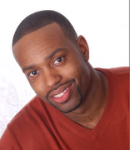
I usually see what level the student is on and we go from there. The age and interest of the students will also tell me which way to go in the lesson. Usually with beginner students the Hal Leonard book is a good place to start but I'm willing to start with any beginning book. If the students are just interested in one specific thing then we focus on that. Read More
Instruments: Piano Trumpet Trombone Saxophone Flute Ukulele Recorder Euphonium French Horn Tuba
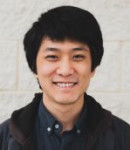
My teaching experience began when I was in college. I taught trombone and euphonium private lessons for several years in the school district that I attended when I was a student. Additionally, I also have done All State Masterclasses for the TMEA trombone etudes. Encouraging regular practice, building the life-long skill of discipline, and hard work are key skills that I enjoy getting to emphasize to my students, as it has a tendency to build student progression and ultimately gain a passion for learning the instrument. Read More
Instruments: Piano Voice Saxophone Organ
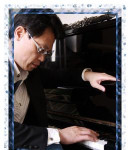
I've been in the field of music education, production and performance for over 20 years. I have spent half of my life helping others find their path in music. One of the most important lessons I have learned as a teacher is that...."people don't care how much you know until they know how much you care!!!!" I understands that building a relationship with a student is just as important as the information I teach. Read More
Instruments: Piano Accordion Keyboard
Music has been my life.. I was born in Russia...Started to learn piano since 6 years old.. I went to Music school for 7 years , then continued music education for 4 years in Music College, and for 4 years in University... I became professional musician - a piano and piano accordion player. Beside performing I was teaching students in different Music schools and Music college...I have a Master degree in Music in both Russia and United States. Read More
Instruments: Piano
For beginning students who are children, I typically start with a method book in order to introduce finger numbers and good technique. We build more and more skills as time progresses. Depending on the student, we may depart from the method book and learn more substantial songs; I'm very good with adapting to the skill levels and strengths of each student. With older students, since they generally have a better feel for what songs/composers they like, I will give them more freedom to choose their own songs and work with them from there. Read More
Instruments: Piano Saxophone Clarinet
For the beginners, hold a correct gesture, good handposition, or firm embouchure, and air support are some of the main requirements. When the students start to learn, adding upmore etude books, like Rubank Method, Rose Etude, Kell, Thompson, Byer, Just the Fact, Sonata, Concertos, Etudes...., and music from different genre would be presented at different timings. During the lessons, fine hand positions, great tone quality, good embouchure, fine posture and position would be the fundamental requirements and will be reminded at all time. Read More
Instruments: Piano
I have been teaching piano and music theory since 1984. I worked with children between the age 6 and 18 years. My students are also encouraged to have recitals at the end of the year. I organize activities such as concert, performance, and exams. I use my pedagogical skills to achieve the best education for students in my classes. Read More
Instruments: Guitar Bass Guitar
What advice do you have about practicing effectively?
My advice to any student of guitar is to practice because any one who plays guitar or any other instrument learns - if I don't play, I don't learn. I have also learned that half an hour to 45 minute periods of time can be enough. More than that, can discourage a beginner. Also, even with my many years of experience, if I haven't played in a while, it shows. So enjoy practice, don't burn out, and don't give up!
How do I know if my child is ready to start lessons?
The way I believe any child's parents can know he/she is ready to learn an instrument or anything else is interest. If a child listens intently to music, talks about music, or even pretends to play music these are the signs that the child is ready. Some children show little interest in school work, but they easily concentrate on music. Although this can be irritating to a parent, music teaches us organization and the need to listen to the teacher to understand the subject. Also age pass 6 is a good milestone. Size does matter to be able to hold and do proper fingering on a guitar. As funny as it sounds, air guitar can lead to real guitar with the right teacher.
When will I start to see results?
Results are easy to see. Step by step learning to master the basics leads to growing accomplishments. Also, parents and family need to watch as a student takes the basics and turns them into songs. Before long, they will be creating their own music. So results are based on practice interest, and encouragement. If a student has that going for himself, results can come in the first few months. Every step is a success. Remember, they couldn't do any of this before. Their ability to play needs to be celebrated by the family so that students can be proud of their learning.
Did you have a teacher that inspired you to go into music? How did they inspire you?
Yes, I did and his name was Steve Hunter. he was a rock guitarist from my hometown of Decatur, Il. He worked at a music store in our city called Ax-In-Hand. He was the guitar instructor there. I was 10 years old and dreamed of being a big rock star. He was very understanding and patient which is what a good teacher needs to be. He left soon to become a studio musician and later played with Alice Cooper and in the recording studio with Black Sabbath. He took me through the basics of cords and reading music, but he always said to listen to music and try to recreate it. That has been my best guide since his lessons started.
25 Years
Since We Started
41,456+
Happy Customers
10,769
Cities with Students
3,123
Teachers in Network
Trusted as the industry leader, for over 21 years the teachers in our network have been providing Piano lessons in Frisco to students of all ages and abilities.
We'll then reach out to the teachers for you.
Schedule the risk-free trial lesson directly with the teacher.
Continue with that teacher or try someone else.