
 480-264-0673


Musika Quick Stats
25 Years
Since We Started
41,456+
Happy Customers
10,769
Cities with Students
3,123
Teachers in Network
Lesson Special - Up to 20% OFF! Get Started Now with a Risk-Free Trial!
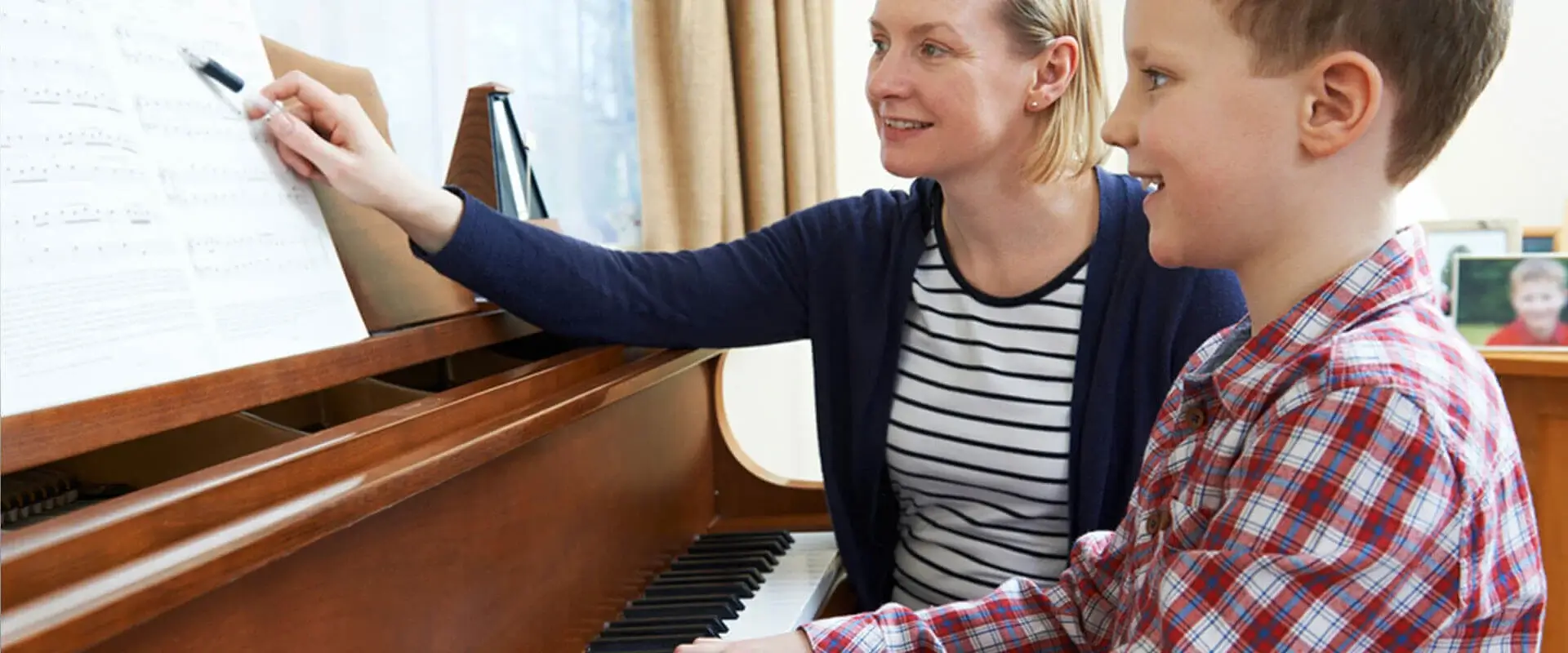
Here are just a few of the many teachers offering Piano lessons in Peoria . Whether you are looking for beginner guitar lessons for your kids, or are an adult wanting to improve your skills, the instructors in our network are ready to help you now!
Instruments: Piano Guitar Voice Drums Bass Guitar Synthesizer Harmonica Lap Steel Guitar Banjo Ukulele Mandolin Recorder Conga Latin Percussion
I have a very personal and relaxed way of teaching that helps each student enjoy and advance on their chosen instrument at their pace. I prefer 60 minute sessions to have the time to fully evaluate and advance from the previous lesson and to move on to new material. I use the student's preferred style of music to teach them how to play, and expand their styles and technique from there. Read More
Instruments: Piano Music
My first lesson is a casual meeting with the student (child/parent, or adult). I want to both meet and start to develop a good relationship and understanding with all involved. With younger students I talk with the parent and show them what we are working on and the logic behind it. Of course, this strategy applies to adults as well. I watch the student's progress very carefully and acknowledge accomplishments because this creates enthusiasm and further development. Read More
Instruments: Piano Guitar Voice Trumpet Trombone Clarinet Synthesizer Ukulele Recorder Euphonium Keyboard Acoustic Guitar
A child will not learn to play an instrument overnight or in one week, the commitment to practice and keeping track of that practice is essential. Nothing helps us learn better than encouragement, even when it sounds bad. Any teacher can tell if a student hasn't practiced or put forth a good effort. Sometimes, you do have to let them know you know, but you try to do so gently. Read More
Instruments: Piano Guitar Drums Bass Guitar Electric Guitar Acoustic Guitar
However, I did not stop at just sharing knowledge. One of my students named Recker Eans was interested in playing shows at 6 years old so I taught his parents to manage a social media account for him and to go play out at places such as First Friday on roosevelt row. He quickly gained traction and has now been on Fox News, BBC, and a couple other local news programs. Read More
Instruments: Piano Voice Trumpet Trombone Saxophone Flute Clarinet Drums Recorder Euphonium French Horn Tuba Mallet Percussion Oboe English Horn Keyboard
I am dedicated, persistent, and reliable. I am willing to learn and keep learning for the advancement of myself and my students. A well-rounded appreciation for music as well as critical listening and ear-training skills will be taught. I also maintain a pretty fast paced lesson, enabling the student to have plenty of practice material, technique studies, and goals to meet. I will record the student's progress electronically so that the student may better understand and learn from their lessons. I will inspire my student’s, positively influencing and encouraging them along our journey of musical discovery. Read More
Instruments: Piano Voice
I am a passionate performer and teacher of music! I have been singing and playing the piano since I was 9 years old and i have performed in musical theater throughout my community for 20 years. In college I had the privilege of traveling throughout the United States with Brigham Young University's Mountain Strings band as the pianist and supporting vocalist. Since then I have participated in music and theatre throughout my community. Read More
Instruments: Piano Voice
I studied dance at the age of 6. My mom bought a piano for herself to learn to play. I would go to the piano and try to make up songs that I could dance to, which then lead me to take piano lessons for 15 years. Committment, joy, and passion are the keys to learning and growing as a music student. I enjoy teaching all styles, as well having students learn to arrange and express their own style within the piece they are learning. Read More
Instruments: Voice Music
When did you decide to become a professional musician? Was it a gradual decision or was there a defining moment for you?
I knew ever since I was a child that I was meant to be a professional singer. I even had dreams ever since I was younger about me performing music, my parents have my sisters and I on vhs tapes singing and playing the kiddy piano, and I had a heavenly encounter where I was singing in heaven in beautiful clothing.
What is your favorite style/genre of music to play and why?
Honestly, for me it is very hard to pick a favorite genre because I love them all, and I listen to and sing all genres. I will say however that I have a preference for music in other languages.
Does music run in your family? Tell us a little about your musical family members.
Music definitely runs in my family on my mother and father’s side. Music, performance, acting, and the arts in general go back generations on both sides.
What does a normal practice session look like for you?
A normal practice session for me starts with breath work, stretches, relaxation exercises, vocal warm ups, choosing repertoire, working on my theory workbooks, working on my piano, and I teach myself piano and other fun vocal things.
If you weren't a musician what do you think you'd be doing instead?
If I was not a singer I would probably be working in the sciences. I love all types of sciences like the sciences of human behavior, the human body, plants, and animals.
If you have a Music Degree, what is it in (Performance, Education, Musicology, Theory, Composition, etc) and why did you choose that degree?
My degree is in vocal performance. I did however, play piano off and on through out the years. And I work on my musical theory books.
What is your dream piece to perform and why?
My dream piece to perform is “The Magic Flute,” “The Queen of the Night.” One of the four languages that I speak is German. And the Magic Flute is in German, and I love the high notes.
What musical accomplishments are you most proud of?
I am most proud of the superior ratings that I have received from recitals, I have done many performances, and I have a lot of views on social media.
Have any of your students won awards or been selected for special honors? How have they succeeded?
My hope is that when I start teaching my students will win competitions. I don’t currently have any students right now but, with hard work and practice there will be many wins.
What do you think is the hardest thing to master on your instrument?
I think that sometimes it can be difficult to grow your range and develop confidence in your self and your instrument. These are things that I continue to work on daily. And it is hard not to compare myself with others as well.
Do you use specific teaching methods or books? (Ex: Alfred, Bastion, Suzuki, Hal Leonard) Why did you choose them if you did?
I have developed some of my own methods. For example, I have learned animal sounds in order to strengthen and stretch my range. I was surprised at how many animals and birds make sounds that sound like the human voice.
Why did you choose your primary instrument?
I chose voice as my instrument of choice because I love to sing. I am also a dancer and I put my dance and singing videos on YouTube and TikTok.
Did you have a teacher that inspired you to go into music? How did they inspire you?
A teacher that I had from junior high all the way up to my age now inspired me to continue with my music. This teacher of mine has unfortunately passed on but, he taught me many wonder things that instilled a sense of pride in my many cultural backgrounds.
When will I start to see results?
I don’t try to put a time limit on a student’s improvement because it depends on the student. I can provide the students with all the tools necessary however, the students must practice applying them.
What advice do you have about practicing effectively?
Practice and repetition are of upmost importance. I also love the fact that social media provides challenges that help the students improve in many areas. I would have the students do fun challenges to help them improve vocal quality and range.
How do I know if my child is ready to start lessons?
You know by assessing the personality and the levels of the student. I also think that she and personality play a big role. For example, a child can be too young to begin lessons.
25 Years
Since We Started
41,456+
Happy Customers
10,769
Cities with Students
3,123
Teachers in Network
Trusted as the industry leader, for over 21 years the teachers in our network have been providing Piano lessons in Peoria to students of all ages and abilities.
We'll then reach out to the teachers for you.
Schedule the risk-free trial lesson directly with the teacher.
Continue with that teacher or try someone else.