
 703-348-8053





Musika Quick Stats
25 Years
Since We Started
41,456+
Happy Customers
10,769
Cities with Students
3,123
Teachers in Network
Lesson Special - Up to 20% OFF! Get Started Now with a Risk-Free Trial!
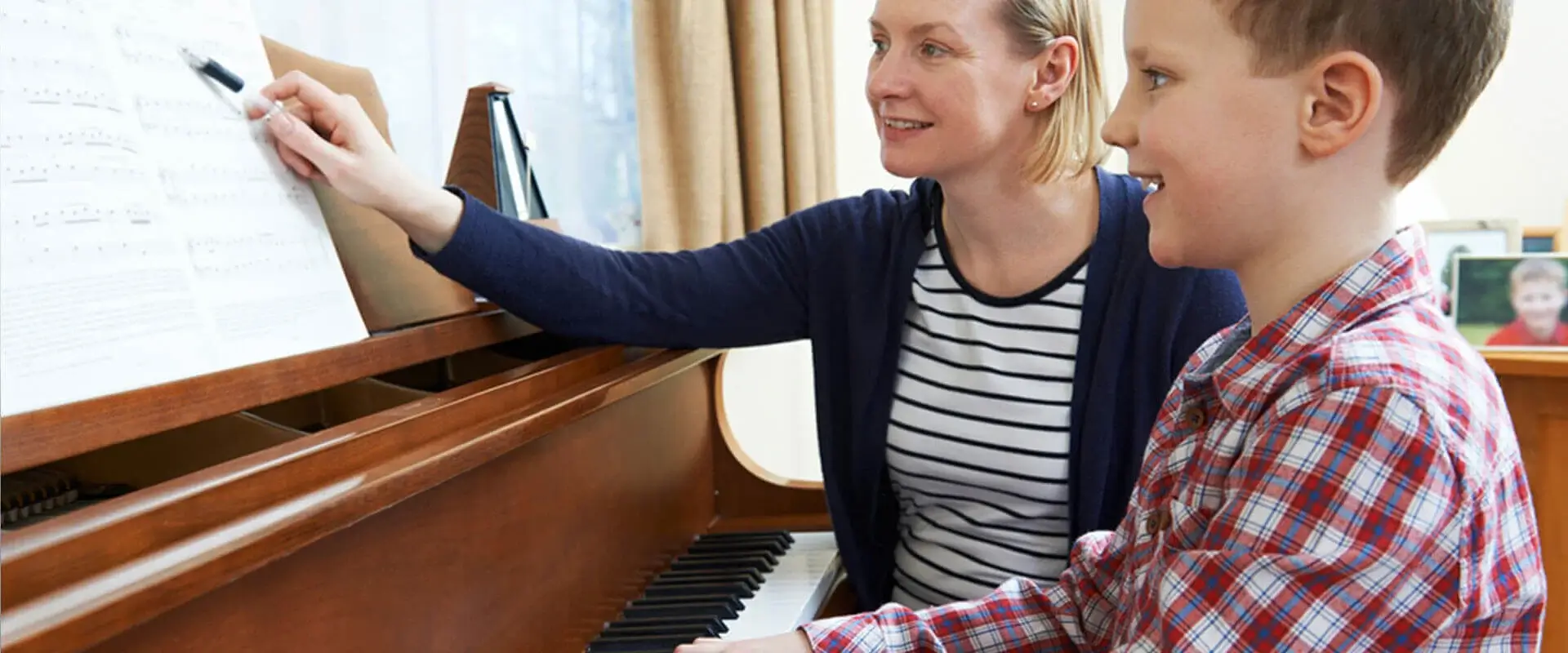
Here are just a few of the many teachers offering Piano lessons in Leesburg . Whether you are looking for beginner guitar lessons for your kids, or are an adult wanting to improve your skills, the instructors in our network are ready to help you now!
Instruments: Piano Cello
Beginner Adult cellists: I give adults the option of starting off in Essential Elements or moving at a faster pace with the Suzuki books. After learning the fundamentals of playing, I then tailor the lessons to the students individual needs or tastes. Beginner children pianists: I like using the Piano Adventures series with this group. I usually start with the Primer book before Book 1. For children in the 4 to 5 age group, I start off with the Pre-Reading books A thru C. Read More
Instruments: Piano Guitar Voice
Michael has over 8 years of experience teaching students from age 6 through adult, from directing large ensembles (70+) to private lessons. He specializes in teaching singing, but also has taught beginning guitar and piano lessons, composition, music theory and history, and digital recording. Read More
Instruments: Piano Voice
I am a classically-trained pianist who loves sharing the joy of music with others. I graduated from Coastal Carolina University in 2017 with a Bachelor of Arts degree in Music, with a concentration on music education. During my studies, I developed a love of folk music from around the world, and have found that it is a great teaching tool. I am very passionate about music theory and ear training and love to teach others about them. Read More
Instruments: Piano Voice
I'm a motivated instructor who is passionate about working with students while sharing my love for music. In July of 2020, I earned a Bachelor's of Music in Piano Performance as well as a Bachelor's of Science in Psychology from Liberty University. I am also a member of Music Teachers National Association (MTNA). I have studied the piano for 17 years, but have been professionally trained as a classical pianist for the past 12 years. Read More
Instruments: Piano Flute Recorder
I see it as a great honor and serious responsibility to be able to teach music. Based on my own experience, the connection between the teacher and student is one of the most important factors in developing a student's passion for music, and encouraging them to progress. While my teaching approach varies with each individual, all students should feel supported and encouraged to be expressive players and thoughtful musicians. Read More
Instruments: Piano Voice
I work to foster a love of music and a desire to excel in each of my students. I want them to practice because they love it and want to succeed! I also feel that it is important to be a well rounded musician, so we will focus on theory, sight reading, composition, musicianship, performance-practice, and other important and fun aspects of music. I believe that it is important to be grounded in a classical foundation (for both piano and voice students), but I also make sure to bring in pieces of the student's favorite style- which I find helps motivate them to practice and enjoy lessons even more. Read More
Instruments: Piano Guitar Voice Drums Bass Guitar Synthesizer Accordion Harmonica Lap Steel Guitar Banjo Ukulele Mandolin Mallet Percussion Orchestral Percussion
Originally being a self-taught musician, I began with piano and harmonica, then eventually branched out to guitar, bass, banjo, among several others. I have ran sound equipment from an early age as well, learning how to set rigs for full bands and how to mix and master tracks for recording purposes. I have met and played with many famous and unfamous musicians, and find that the highest amount of talent is undiscovered and uncultivated. Read More
Instruments: Violin Viola
If you have a Music Degree, what is it in (Performance, Education, Musicology, Theory, Composition, etc) and why did you choose that degree?
I have a Bachelor of Music in Viola Performance and a Master of Music in Viola Performance degree. I chose to pursue these degrees in performance because I have a deep passion for playing the viola and a strong desire to share my knowledge and expertise with aspiring musicians like your child.
During my undergraduate studies, I focused on honing my technical skills and developing a solid foundation in music theory and history. This allowed me to become a proficient violist and gave me the necessary tools to excel as a performer. I also had the opportunity to work closely with renowned professors and mentors who further inspired and guided me in my musical journey.
For my Master's degree, I wanted to continue refining my performance abilities and delve deeper into the art of viola playing. This degree provided me with more advanced training, access to a wider range of repertoire, and the chance to collaborate with talented musicians, all of which helped me reach a higher level of proficiency and artistry in my playing.
Ultimately, my choice to pursue degrees in Viola Performance was driven by my love for the instrument and my desire to pass on my knowledge and passion to the next generation of musicians. I believe that a strong foundation in performance is essential for anyone wishing to excel in the world of music, and I am dedicated to helping your child develop their skills and reach their full potential as a violinist or violist.
What is your dream piece to perform and why?
Well, it's wonderful that you're interested in my dream piece to perform on the violin or viola. There are so many incredible compositions out there, but if I had to choose just one, it would be the Sibelius Violin Concerto for the violin and the Walton Viola Concerto for the viola.
The Sibelius Violin Concerto is a true masterpiece that captures the essence of the Northern landscapes and evokes a deep emotional connection. Its soaring melodies and dramatic passages make it a thrilling piece to perform. What I love most about it is its ability to convey a wide range of emotions, from haunting melancholy to triumphant exuberance. As a musician, I would relish the opportunity to immerse myself in this concerto and convey its powerful storytelling through my playing.
On the viola, the Walton Viola Concerto is a true gem. This concerto is known for its lyrical beauty and the intimate connection it forges between the performer and the audience. It's a piece that requires not only technical mastery but also a deep understanding of its emotional nuances. The way it explores different moods and textures is truly captivating. Performing the Walton Viola Concerto would be a dream come true because of its unique ability to touch the hearts of those listening.
Both of these concertos are like musical journeys, and I believe that as a performer, they would allow me to express myself fully, bringing out the rich colors and emotions of the violin and viola. They are also a testament to the incredible depth and diversity of the repertoire available for these instruments, and I would be honored to share their beauty and complexity with audiences. Ultimately, it's the opportunity to connect with the audience through these powerful works that makes them my dream pieces to perform.
25 Years
Since We Started
41,456+
Happy Customers
10,769
Cities with Students
3,123
Teachers in Network
Trusted as the industry leader, for over 21 years the teachers in our network have been providing Piano lessons in Leesburg to students of all ages and abilities.
We'll then reach out to the teachers for you.
Schedule the risk-free trial lesson directly with the teacher.
Continue with that teacher or try someone else.