408-389-3524



Musika Quick Stats
25 Years
Since We Started
41,456+
Happy Customers
10,769
Cities with Students
3,123
Teachers in Network
Lesson Special - Up to 20% OFF! Get Started Now with a Risk-Free Trial!
Here are just a few of the many teachers offering Guitar lessons in Sunnyvale . Whether you are looking for beginner guitar lessons for your kids, or are an adult wanting to improve your skills, the instructors in our network are ready to help you now!
Instruments: Guitar Ukulele Music Electric Guitar Classical Guitar Acoustic Guitar
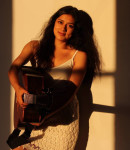
In 2014, I was also featured in the Acoustic Guitar Magazine May 2014 issue, as one of the "30 Great Acoustic Guitarists under the age of 30." I studied classical guitar performance with Bill Coulter at the University of California, Santa Cruz. There, I also received masterclasses with classical guitarists, Andrew York, Benjamin Verderi, and Grisha Goryachev. I have also studied with acclaimed fingerstyle players such as Alex de Grassi and Thomas Leeb at their summer workshops. Read More
Instruments: Guitar
For young beginners, I usually start with basic theory notions taken from the Lizard Academy books, combined with some exercises on the guitar. Once comfortable, I start to introduce some notions about improvisation and soloing, as well as increase the difficulty of the exercises I want them to practice on. For young adults or adults, I like to take my students in the direction they want to go, besides teaching them something slightly different just to enrich their background. Read More
Instruments: Guitar
I use a variety of books, recordings, and online resources for all levels- transcriptions of classicstylesand newer artists , scale and chordreference books, solo pieces for different genres,beginning guitarmethods bytraditional publishers such as Hal Leonard and Warner Bros. plus newer books. Online video and audio content andrecording software such as garageband arealso valuable resources to work with.Learning to read and write music opens up great potential for communication and creativity- theory and improvisation are other topics that I like to teach. Read More
Instruments: Guitar Bass Guitar Double Bass
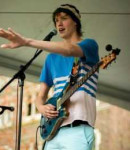
One of the many things I learned that will always be a part of my approach to teaching music is how jamming or having a conversation with expert musicians is the most fundamental and important way to learn how to develop your voice and technique on your instrument. My approach at my studio is designed to allow students the opportunity to jam and learn. Making music can and should be as fun as learning to speak for the first time. Read More
Instruments: Guitar Drums Bass Guitar Electric Guitar Acoustic Guitar
I have performed dozens of shows with big bands, jazz combos, rock bands, and choirs. I have recorded both professionally and in my own practice space. I have experience teaching young children percussion, as well as general teaching experience with children ages 3-8. I love setting a good example for young people and sharing my love of music with them. As an intelligent, hard-working, and personable young man, I believe I am well-equipped to the task of instruction. Read More
Instruments: Piano Guitar Voice Keyboard Acoustic Guitar
I am an Artist who loves to see his students succeed. I have a strong passion for music, and utilize that passion and the skills I've developed throughout my career to cultivate students into fellow Artists. My primary goal as a teacher is to tap into the potential artistry of the students. For that reason, I am not as focused on the technical skills, as I am about spotlighting the inspiration that will facilitate the student to embody the Artist with original expression and purpose in their art form. Read More
Instruments: Guitar Trumpet Trombone Euphonium Tuba Classical Guitar Acoustic Guitar
I first began taking private students in the 1990s, and continued to teach privately through my undergraduate years in the early 2000s. Though I stopped for some time to pursue artistic and professional ventures in music, I recently returned to the teaching realm, and am exciting to take on new students. In addition to private brass lessons, I have taught music in public schools through various non-profits and, above all, enjoy the light that comes on in a student's eyes when he/she "gets it." It is why I do what I do. Read More
Instruments: Flute Piccolo
Did you have a teacher that inspired you to go into music? How did they inspire you?
My aunt that I lived with in California for a few years had an old flute that she let me use for band in 3rd grade. She was in high school at the time, and was an amazing flautist who I always looked up to. She was the reason I started flute in the first place. Since then, I have had several role models throughout middle and high school as well as college. I feel like I was always under someone's wing, and that made all the difference.
What advice do you have about practicing effectively?
The old adage, "Practice makes perfect" is truly an understatement, which many students discount throughout their musical tutelage. As a teenager taking private lessons and maintaining first chair in a symphonic band, I hated to practice, but knew that was the only way I would grow and hone my skills. Even if a student just plays a few scales and/or a song from their folder for 15 minutes a day, it's so much better than not taking the instrument out of the case at all.
How do I know if my child is ready to start lessons?
If your child is interested in learning an instrument, it's worth getting them lessons sooner rather than later, at least to see if it's really what they want. I lived in southern California at the start of my 3rd grade year, and they started teaching students on instruments in that grade. I started on the flute and fell in love with it. After a few years my family moved us back to Indiana, and they didn't begin any kind of instrumental instruction until middle school, which was the 6th grade. I was very lucky to have started early because it gave me experience. I am an advocate of always learning when there is an interest, not based on school criteria.
When will I start to see results?
I wish I had a crystal ball so I could tell you when you would see tangible results. Unfortunately, that's not how it works. There are students who are very quick learners and move through lessons without a hitch. But that is not always the case. Everyone learns at their own speed. If I see potential and to keep working, I will definitely tell you that your child is progressing in the right direction. Alternatively, if results are not coming at an average pace, or if the student is struggling, I would want to meet with you to evaluate their course and see if there are any alternative options. What I mean by this is the flute may not be the right instrument for them, but another instrument could possibly be a great fit. I would always take the time to work thoroughly with the student to find out their best fit.
25 Years
Since We Started
41,456+
Happy Customers
10,769
Cities with Students
3,123
Teachers in Network
Trusted as the industry leader, for over 21 years the teachers in our network have been providing Guitar lessons in Sunnyvale to students of all ages and abilities.
We'll then reach out to the teachers for you.
Schedule the risk-free trial lesson directly with the teacher.
Continue with that teacher or try someone else.