
 714-582-3981




Musika Quick Stats
25 Years
Since We Started
41,456+
Happy Customers
10,769
Cities with Students
3,123
Teachers in Network
Lesson Special - Up to 20% OFF! Get Started Now with a Risk-Free Trial!
Here are just a few of the many teachers offering Piano lessons in Rancho Santa Margarita . Whether you are looking for beginner guitar lessons for your kids, or are an adult wanting to improve your skills, the instructors in our network are ready to help you now!
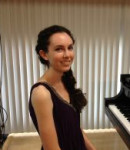
Instruments: Piano Voice
While studying to complete my BA through Cal Poly Pomona, I have had the privilege of touring with Cal Poly Pomona's University Concert Choir for at least three years. I have been heavily involved with this choir for a total of 5 years, and I was appointed as Section Leader for the Sopranos for one term, which meant hard work and dedication almost paid off back then. This was the period of my gigging days because some of these tours were paid tours where all of singers were paid to perform around SoCal. Read More
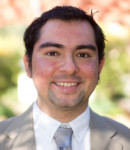
Instruments: Piano
I am a patient and organized piano teacher with a Bachelor's degree in General Music studies from Cal State San Bernardino. I have earned my Bachelor's in June of 2014. I have taught private piano lessons for three years at my own home, student's homes and in several studios. At my home studio, I have a baby grand and an electric upright. I have studied classical and jazz music as well as theory. Read More
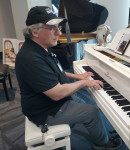
Instruments: Piano Saxophone Flute Clarinet
I like my students to bring a small notebook, so that they may write their homework down, and any practice assignments. I expect my students to keep a practice log of how much time they practice per week, in between lessons. I always insist that setting goals and expectations for them, is very important, as well as keeping track of whether they themselves are staying on task. I try and incorporate different ways of practicing or playing music, so that even practicing turns into being fun and exciting and doesn't feel like a chore. Read More
Instruments: Piano Guitar Bass Guitar Lap Steel Guitar Ukulele Music Electric Guitar Acoustic Guitar
Hello, I began teaching professionally 9 years ago in my home studio. I first started with guitar lessons. I am very passionate about aiding and supporting the growth of students. I provide students with the skills needed for the complete understanding of the language of music. This equips the student to learn any kind of music that is desired. Students are then able to learn classical, jazz, blues, rock, and popular music. Read More
Instruments: Piano
I have been teaching music for the last 17 years. I teach ages from 10 to adult. My music teaching incorporates Russian classical methods and the best traditions of Russian piano performance school. I also incorporate pop, rock and jazz into students' curriculum. It is important for me to know that my student is enjoying the lesson. I encourage my student to enter competitions and recitals so they can feel good about their achievements. Read More
Instruments: Piano Trumpet Saxophone Euphonium
Since that point, I have had 20 students of ages ranging from 6-82 and it is has been wonderful to learn more about teaching and how each student really is a customized project in the making. Finding out what makes each student motivated is a joy that is unparalleled. If you are a student/parent wanting to be understood by your difficulties with the piano, I am the teacher who will understand. Read More
Instruments: Piano Voice Trumpet Trombone Saxophone Flute Clarinet Euphonium Oboe Bassoon
I try to have as much fun as possible while still maintaining a high expectiation of performance. I am, by trade and training, a comedian, so jokes and laughter abound. Most of my students might say I'm not as funny as I think I am, but we still have fun! I am, however a stickler for learning the basics of music theory and correct use of vocabulary. Students won't move on to the next level until I know they have a firm grasp of prior concepts. Read More
Instruments: Voice Drums
What does a normal practice session look like for you?
Vocalistss have different endurance thresholds but I strongly feel that novice to intermediate singers avoid singing for more than 20 minutes per session and no more than one hour to 90 minutes total per day. It is important to take intermittent breaks to keep your voice from tiring or becoming damaged. More advanced students who are interested in additional musicianship skills like ear training and sight reading should practice these objectives on musical instruments to maintain vocal health and stamina.
For example, advanced singers can practice playing different chord types and voicings on piano or guitar during their warm-up. Most vocal warm-up patterns move chromatically (in half-steps) so this allows the opportunity to practice both harmonic ear training and basic piano skills simultaneously. If piano or guitar is your second instrument then you can study theory and harmony on those instruments while you rest your voice. Rhythmic ear training can be accomplished with a drum pad and a pair of sticks. There’s no need to sing everything you need to practice!
Drummers warm up by playing rudimental sticking patterns for 10-20 minutes on the practice pad. If the student is studying traditional snare drum technique then the second part of the practice session would be playing etudes from an appropriate text. The third part of a drummer's practice regimen is practicing drum grooves (beats) on the full set. This would, of course, include the student's musical style(s) of interest.
Does music run in your family? Tell us a little about your musical family members.
My parents were actually quite musical and their library of recordings at home offered me a diverse palette of musical idioms to listen to while growing up. My mother was a tap dancer who performed on stage with her two sisters when she was a youngster. I remember her teacher my sister and I how to "hoof" to the song "East Side, West Side," which I can still perform to this day. Mom also enjoyed singing jazz standards from the American Songbook. She took voice lessons and I used sneak into the library to listen to the reel-to-reel tape recordings she made when she practiced her repertoire to the old Music Minus One vinyl discs. My father surprised us one day when he came home with a full set of drums. We had no idea that he played as a child. On a whim he had decided to revisit his love for Gene Krupa. I think many of my drumming ideas were inspired from watching him play traditional jazz swing.
25 Years
Since We Started
41,456+
Happy Customers
10,769
Cities with Students
3,123
Teachers in Network
Trusted as the industry leader, for over 21 years the teachers in our network have been providing Piano lessons in Rancho Santa Margarita to students of all ages and abilities.
We'll then reach out to the teachers for you.
Schedule the risk-free trial lesson directly with the teacher.
Continue with that teacher or try someone else.