Featured Cello Teachers In New York

Mike L
Instruments: Piano, Cello
Mike started playing and became obsessed with the cello at age 16. He would fuse this new-found obsession with the passion he had developed years earlier for heavy metal music. This has defined the unorthodox style he's developed. His music fuses his classical training with his love of heavy metal, fantasy, film folk music. Building layers of cello on top of each other, he creates a world simultaneously dark, beautiful, wonderful, fantastic breathtaking. Read More

Elizabeth C
Instruments: Cello
For all of my students I try to encourage good basic technique and practicing scales and etudes. I believe in a healthy mix of technique and artistic expression. I also try to help students use their bodies in the most efficient way possible. I help students to create good habits and work to fix bad habits. Read More

Phil H
Instruments: Piano, Guitar, Voice, Violin, Cello, Saxophone, Clarinet, Drums, Bass Guitar, Banjo, Mandolin, Tuba, Keyboard, Djembe, Acoustic Guitar
Yes for teaching piano I use Nancy and Randall Faber's books. I have used all of them. For guitar and mandolin I generally do not use a "book". As the lessons progress I might introduce a book if that is what is called for. All orchestral instruments call for the structure of a book and I augment that with my own explanations. This is true for all ages of learners. Read More

Sarah S
Instruments: Cello
My teaching is strongly influenced by the Suzuki method and the teaching methods of Mimi Zweig and Susan Moses. I incorporate Dalcroze Eurhythmics and general music theory and ear training into each lesson. I believe that learning to play an instrument should be fun and enjoyable, while simultaneously stretching a childs musical imagination and growing their cello technique. At the heart of my teaching is the study of technique, for as ones technique improves, the musical rewards always increase. Read More
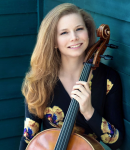
Molly A
Instruments: Cello
In private lessons, through the assignment of scales, arpeggios, technical exercises, etudes, and solo work, students gain a progressive yet sound understanding of technique. Students develop an internal map of the fingerboard, learn how to accurately and consistently arrive in positions, have the flexibility of creating their own a fingerings, understand the fundamentals of sound production, bowing styles, and how to use these techniques as an aid to music making. Read More

BBB Accredited
Don't just take our word for it. We hold the highest possible A+ rating from the nations foremost online reliability source: The BBB. Check out our A+ rating from the Better Business Bureau.