For the sake of lessons and practice, a keyboard is often a much more viable option than buying a piano. Pianos are space consuming and expensive, as well as being very loud. Keyboards are perfect - especially for beginners - as they are more diverse in their functionality. Most keyboards come with a range of different sounds and effects (FX), such as chorus, reverb and synthesizer sounds. Another great feature common to many keyboards is a record function. This allows students to hear things back after they have played them, such as practicing scales etc... or to record ideas they are composing!
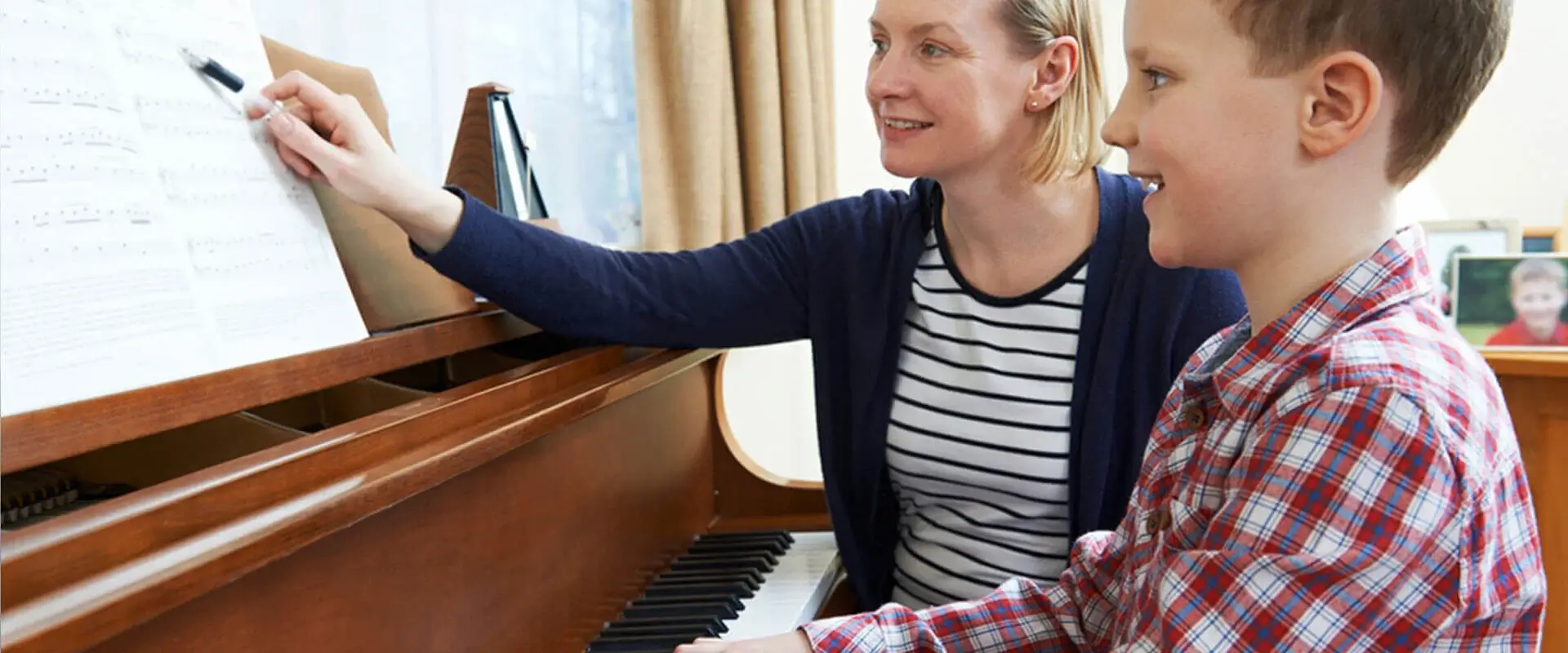
In home lessons are what 90% of our students request. Not only does this provide a convenient means to study music, but we also notice no difference in the quality of lessons done in home or in studio. They are typically structured the same. The main benefit of in-home lessons is the reduction in travel time to another location, and additionaly the student may be able to focus better in your own home since they are familiar with it. Piano lessons in the home offer a practical choice for your family for learning the skill of playing a musical instrument.
There are several different, but vey important elements to becoming a good piano player. It takes time to master the basic skills that will set you on your way to excellence. For beginners, the lessons will focus on elementary piano knowledge and technique, such as learning all the notes of the piano, hand and finger techniques for playing, learning scales and chords, as well as some music theory; reading sheet music, chord charts etc... These basic skills can then be applied to simple songs. Students with these foundations in place can expect to cover things like, diminished chords and other chord types, sight reading, playing more challenging compositions and learning the 7 piano modes - Ionian, Dorian, Phrygian, Lydian, Mixolydian, Aeolian and Locrian mode. Lessons for advanced students might cover topics such as improvisation, glissando, or the study of a specific genre of playing or composer, such as Jazz piano or Johann Sebastian Bach.
Many older students are fulfilling a long standing ambition by taking piano lessons. Some students may have had lessons when they were younger and want to re-learn and others are simply looking for a new hobby. Whatever the aim or reason, there are many benefits to piano lessons for older students. Learning the piano can keep you mentally active, help maintain dexterity, improve your hearing and stimulate the brain in a creative way. Older students can develop basic technique and music theory quite quickly, as their concentration, thinking skills and self-discipline are more advanced than that of children.
Learning to play the piano as a child is a fun, rewarding and vastly beneficial to their overall development. Children can develop their motor-skills, dexterity and coordination through technical piano playing - learning scales, chords and correct fingering. Young students can also develop their concentration, listening skills and ability to master complex thought processes through theory, repertoire and student-teacher feedback. Learning to play the piano can also be character building, such as instilling a hard-working attitude, developing self-discipline and confidence through practice, taking exams, enter competitions or performing recitals.