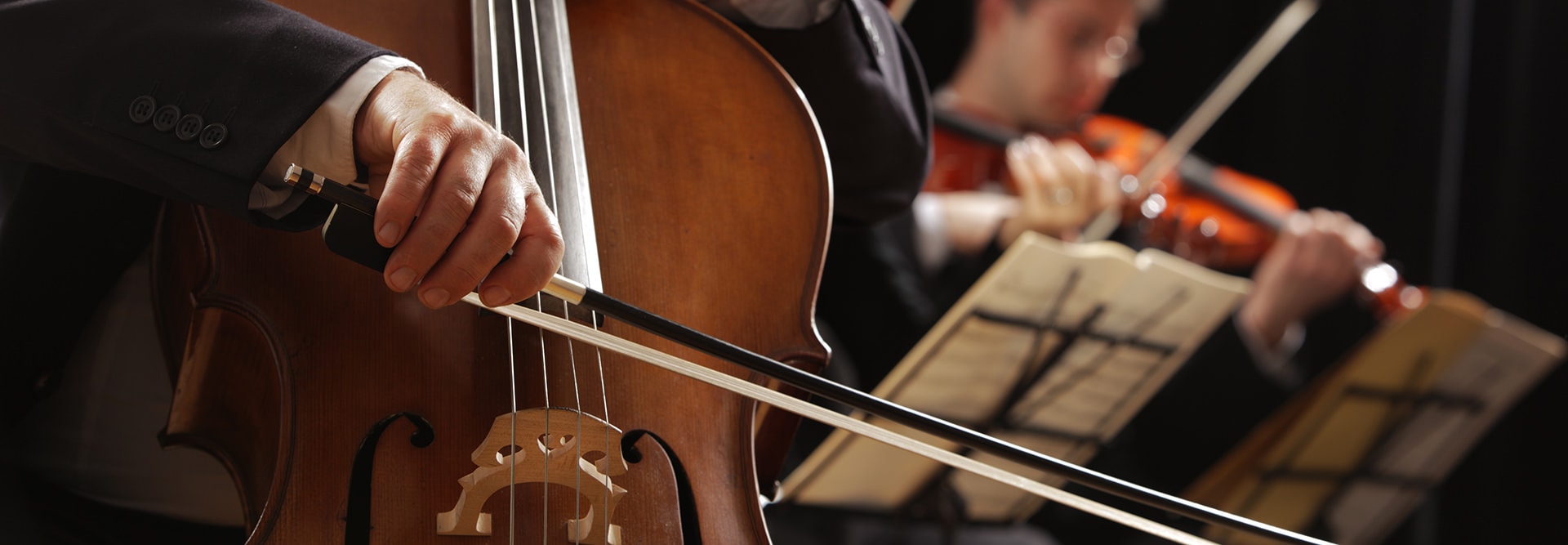
Learning how to play cello is a wonderful experience for students ranging from late elementary school all the way through retirement! The cello is primarily used in solo and orchestral classical music, however in recent years it has been used to some extent in pop, jazz, and rock music. Some examples of bands that have featured the cello on tracks include The Beatles, The Beach Boys, Aerosmith, Nirvana, and Smashing Pumpkins.
The cello is played by drawing a bow over one or more of the four strings on the instrument. By holding down the strings with the hand not holding the bow, different pitches can be produced to play complex melodies. The strings can also be plucked with the fingers, a practice referred to as pizzicato. Cellists generally sit to play with the instrument resting between the legs. An endpin is attached to the bottom of the cello in order to support the instrument’s weight. A cellist holds the bow with the right hand and uses the left hand to stop strings on the neck of the instrument.